All posts by SJM Test

What a lot of nonsense

What a lot of nonsense

Speakers of Yiddish will be well familiar with the term bobba mayseh. Often mistranslated as “an old wife’s tale” (from bobba = “grandmother” and mayseh = “story”), bobba mayseh a lighthearted, semi-humorous way of saying that something is a lot of nonsense. Researching the origins of various artefacts, one often encounters bobba maysehs of various types, but where does the term itself really come from?

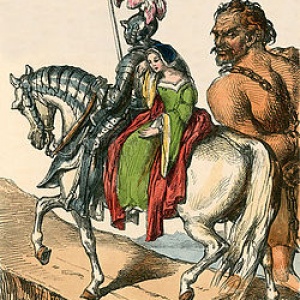
It turns out that the origin of this expression lies in a 13th century Anglo-Norman epic, written in verse and detailing the exploits of Sir Bevis of Hampton. There are lots of similarities between this text and Beowulf, and it was also thought to have served as part of the inspiration for Hamlet. Sir Bevis’ father was a murdered count, whose murderer then went and married his widow. Sir Bevis himself, who was in love with an Egyptian princess, is exiled from his land and is sworn to avenge his father’s death. At one point, he defeats a giant named Ascaparte and makes him his squire.

sir_bevis_and_josyan_leading_ascapart

Sir Bevis leading the giant Ascaparte.

The work was translated into a number of languages (including English in the 14th century), but the most popular one was the Italian (Buovo d’Antona). It was in this form that the work came to the attention of an Italian Jew in the 15th century named Elia Levita, who decided to translate it into Yiddish. His version was enormously popular, and came to be known as Bobba Bukh (“the Bobba Book”). It was the first non-religious text ever written in the Yiddish language, preceding the first Hebrew novel by almost 300 years.

In Levita’s version of the story, in which he supplanted various Christian references for subject matter that would have resonated with a Jewish audience, it is the princess of Flanders with whom the exiled Bobba falls in love and the wicked king of Babylonia who constitutes his nemesis. The Babylonian prince, Lucifer, is promised the beautiful princess, the King of Flanders is taken into Babylonian captivity, Bobba rescues him with the assistance of a magic horse, and the wicked Lucifer is put to death. Twice in the story do Bobba and his lover think the other dead, twice is she almost married to another, and in the midst of all of this excitement he finds the time to return to Antona, banish his mother to a nunnery, kill her murderous husband and become the new king. It’s a real page turner, I am sure.

But already by the 17th century, these stories of mythic tales were ripe for ridicule, and since the epic of Bobba was so well known to Yiddish speakers it came to typify all that was foolish about the genre. A sort of Yiddish Don Quixote, Bobba came to be looked upon as naïve and overly romantic, and started to be used him as a symbol of all that was foolish or unbelievable. Hence, to describe something as a Bobba story (a bobba mayseh) was to say that it was complete nonsense, and this expression is still in use today. That people think it has something to do with grandmothers is perhaps the greatest bobba mayseh of them all.

old-lady

Author: Education Officer, Simon Holloway.

Graphic Art and the Struggle to Represent the Holocaust

Graphic Art and the Struggle to Represent the Holocaust

One of the most rewarding experiences for members of the education department is the opportunity to work closely with teachers in developing programs that challenge and deepen their students’ understanding of the Holocaust.

In October of this year, three staff members from Wenona High School came to the Museum to work with us on developing a unique program that would use the graphic novel as the educational tool to teach their students about the Holocaust.

The program that we developed with the Wenona staff was called ‘Graphic Art and the Struggle to Represent the Holocaust.’  Luke Simkins, Acting Head of Teaching and Learning, was the driving force behind the program. He is a history teacher with extensive experience in Holocaust education and has worked closely with the Museum staff in the past. Colleagues from the English department and Art department were also excited by the educational opportunities and had limited experience in Holocaust education.

Our interactive seminar with Wenona staff (Luke Simkins, Kim Marcovitch, Noosha Jalili  and Kerry Swain) moved through a history of the graphic novel and explored the connections between visual art and the Holocaust. Jewish artists created art while experiencing the Nazi occupation as well as in the years after war.  By visually depicting their experiences the artists created works that bore witness to all that they endured during the Holocaust.  Art was also the medium that some survivors used to express their anguish and pain.  Their drawings and paintings became a very personal expression of their will to survive, as well as their ongoing struggle with traumatic memories.

m2013-043-007

The history of the graphic novel is intimately tied to the history of the Holocaust.  The creators of Superman (Jerome “Jerry” Siegel and Joseph “Joe” Shuster) were both first generation American Jews whose families had come to the United States from Europe. When Siegel himself reflection on why he created Superman he acknowledged the impact that the persecution of European Jewry had on their creation:

“What led me into creating Superman in the early thirties? … Hearing and reading of the oppression and slaughter of helpless, oppressed Jews in Nazi Germany … seeing movies depicting the horrors of privation suffered by the downtrodden … I  had the great urge to help… help the downtrodden masses, somehow. How could I help them when I could barely help myself? Superman was the answer.”

img_8154

Siegel quoted in Mel Gordon’s Siegel and Shuster’s Funnyman

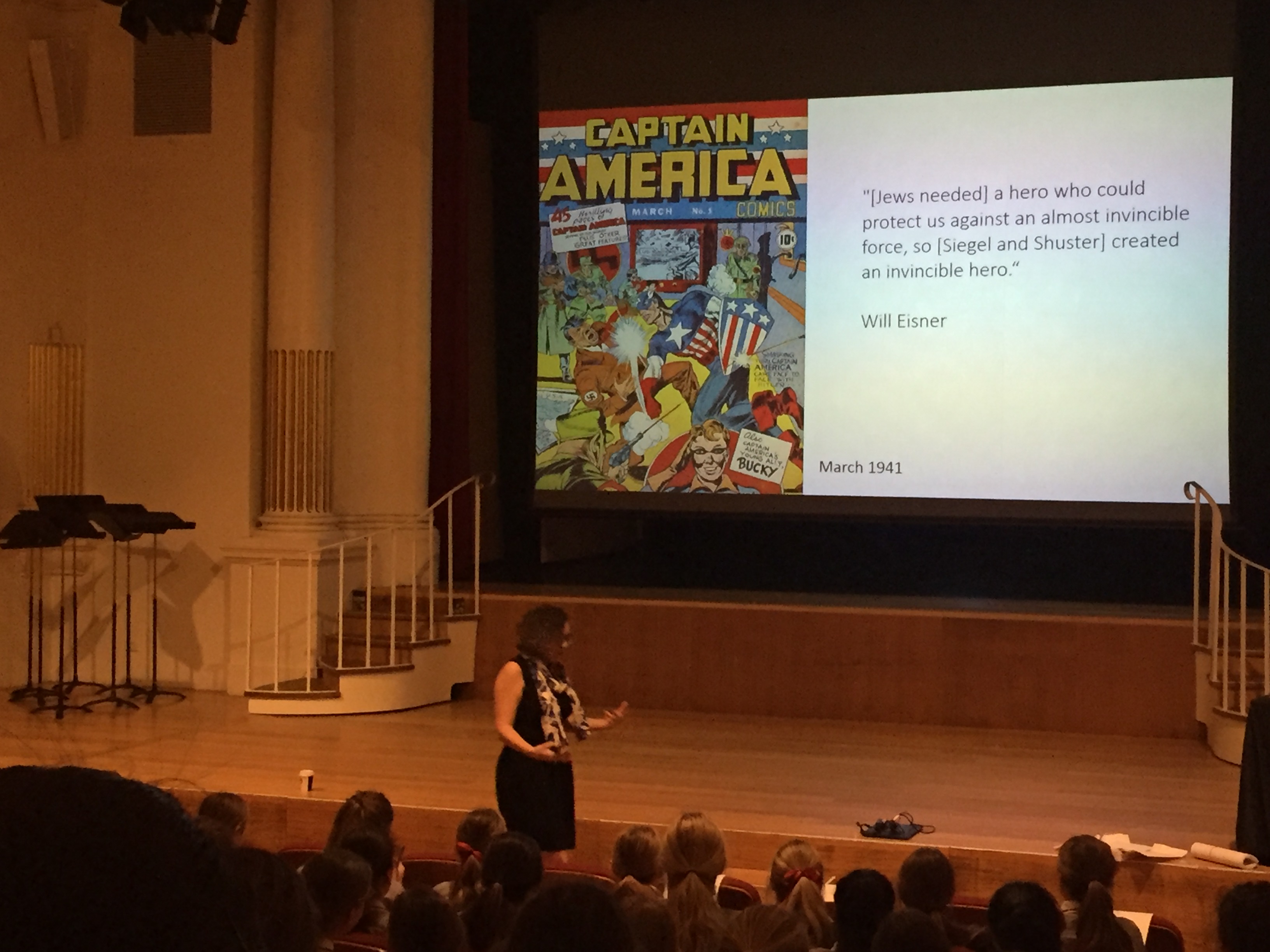
Captain America was created by Joseph Henry “Joe” Simon and Jack Kirby (born Jacob Kurtzberg) also as a direct response to the persecution of Jews in Europe. The first Captain America story every published depicted their superhero punching Hitler in the face. The story was published in March 1941, several months before the United States had joined the War. Captain America’s first story was an overt political statement supporting American military involvement in World War II.

img_8157

As we discussed the significant connections between the Holocaust and the graphic novel it was exciting to see the teachers from Wenona realise the educational opportunities the graphic novel opened up for them and their students. Graphic novels would offer a unique, challenging and confronting way to study and think about the enduring importance of the Holocaust.

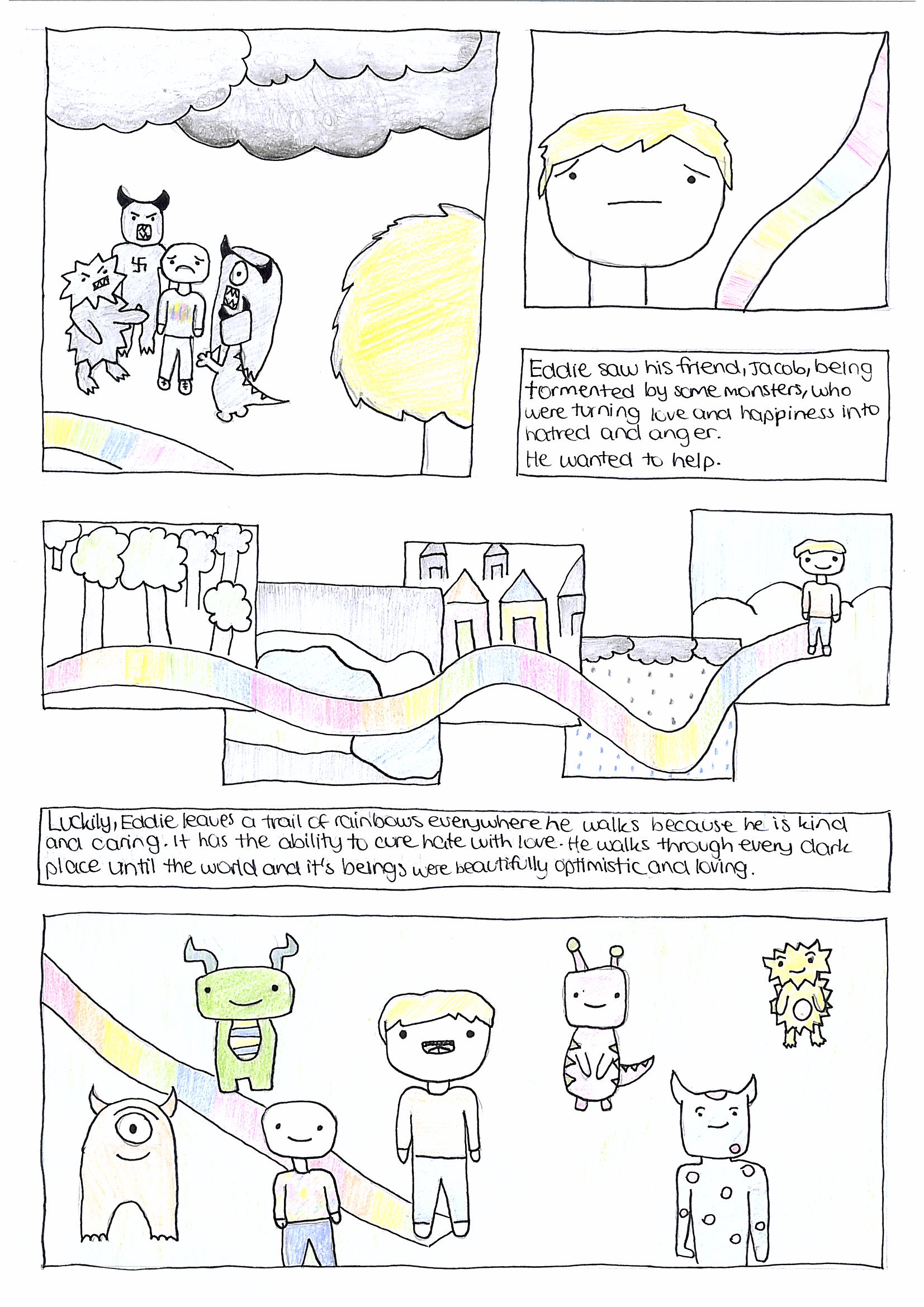
The students from Wenona had already met with Holocaust survivor Eddie Jaku earlier in the year, so the decision was made that they would create pages from a graphic novel depicting aspects of his testimony.  This decision was also made because they had access to his testimony via the Museum’s YouTube channel so they could re-watch parts of his story to ensure they quoted Eddie accurately and remembered the details of his story.

Eddie never wrote down his testimony, so their graphic depictions would be the only literary mediums depicting his personal story. Students understood that they were being entrusted with not only a special task but also had to make important and sensitive considerations.

Utilising the graphic novel as an entry point raised important questions for students to consider: What were the limits of representation? What role can art play in enriching our understanding of events like the Holocaust? By creating graphic novels dedicated to Eddie’s individual story, how would it enable to students to understand both the importance of the individual experience as well the wider context of the Holocaust?

One of the questions we constantly re-evaluate as Holocaust educators is how to teach about this difficult subject in ways that allow students to deepen their historical understanding of the event while also making their own connections and meanings. We are particularly aware that one of the most important aspects of our jobs is ensuring that students understand that the legacy of the Holocaust remains with us today.

After spending two sessions with the Year 10 girls at Wenona School, we were astonished by how deeply, fully, thoughtfully and sensitively they considered Eddie’s testimony and their approaches to depicting it.  In chatting with each group of girls they had clear ideas and could articulate the value of not only learning about the Holocaust, but also to hear survivor testimony and respond to it.

Authors: Marie Bonardelli and Dr Ari Lander

The art of interpretation

The art of interpretation

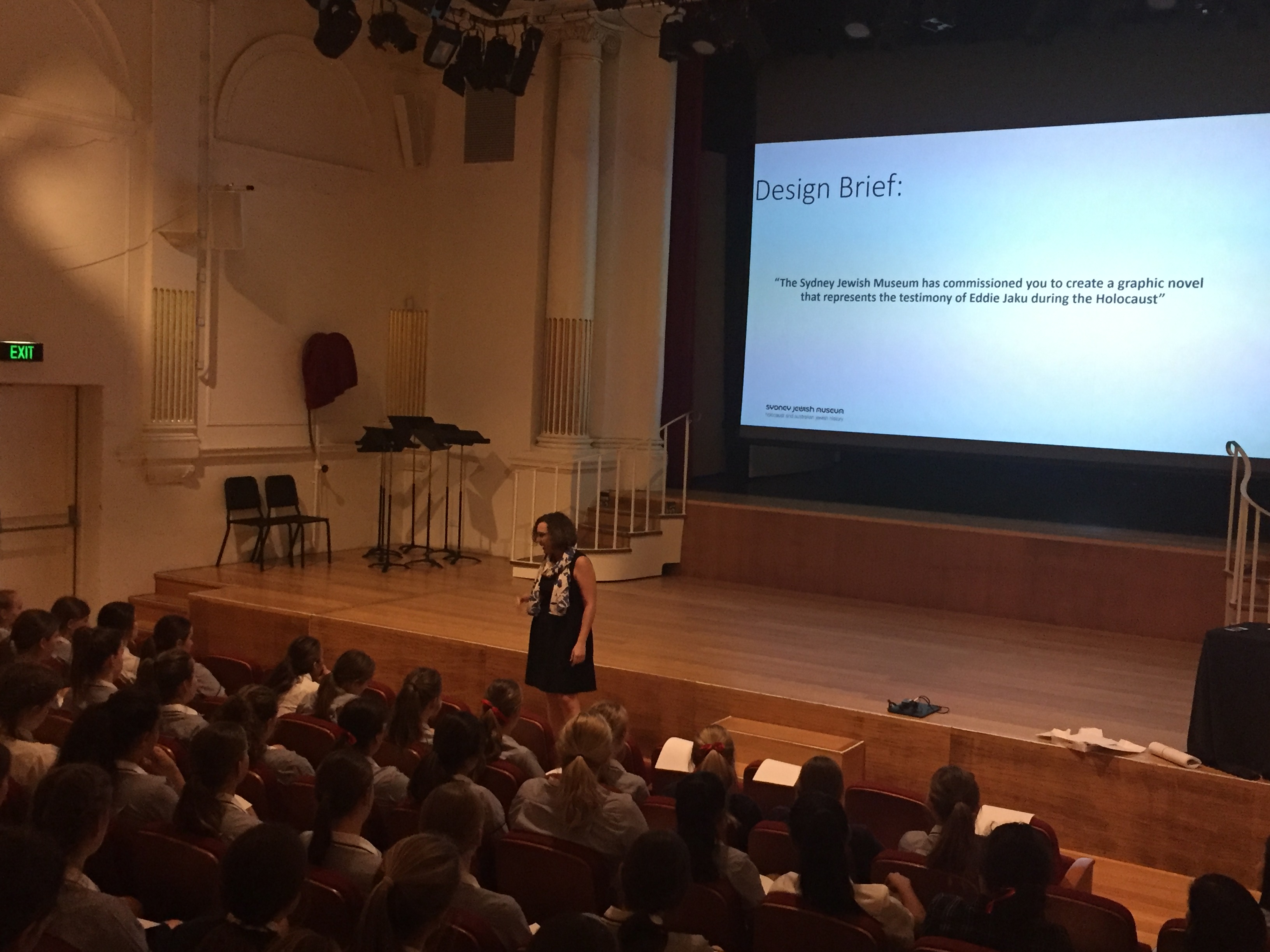
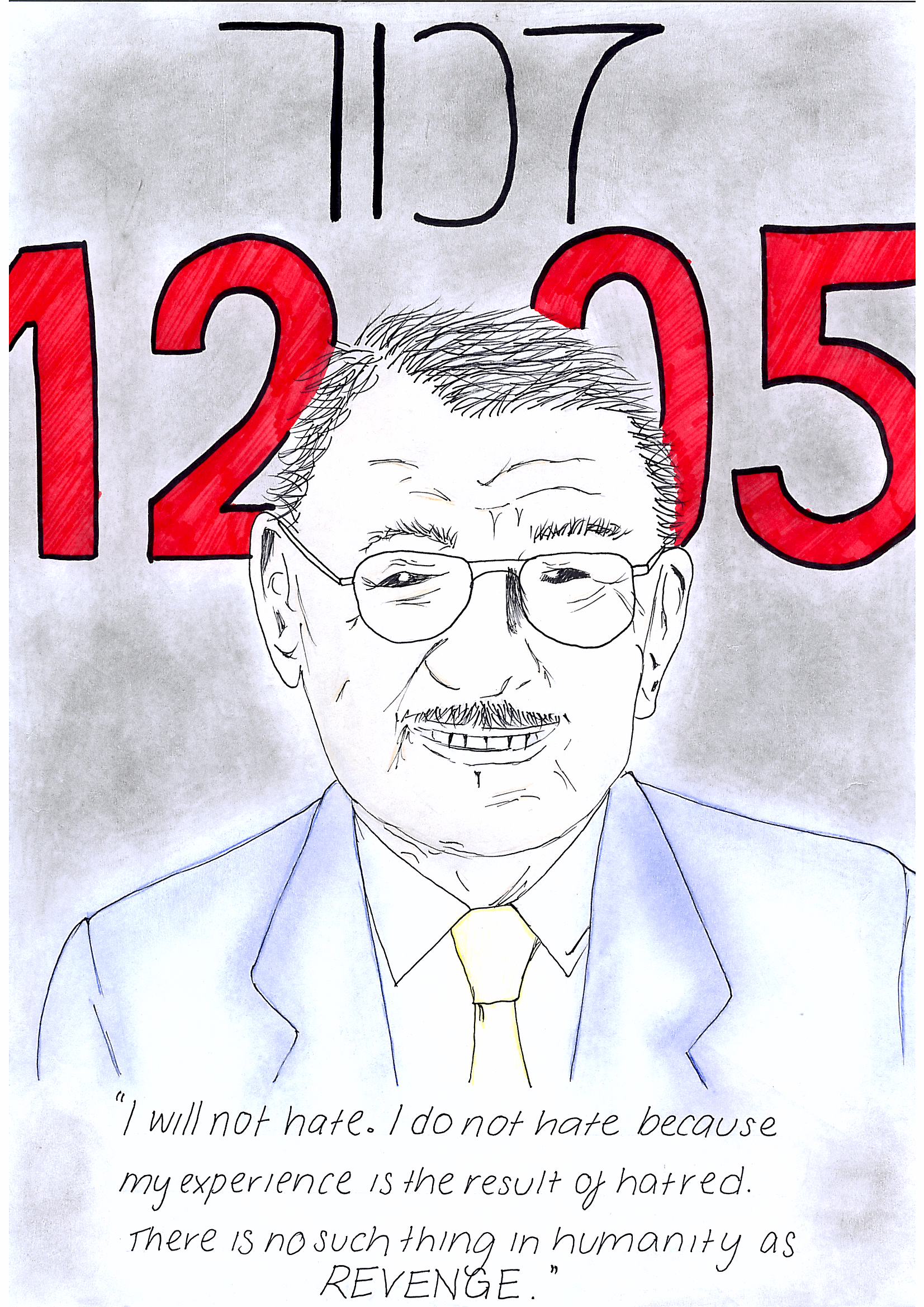
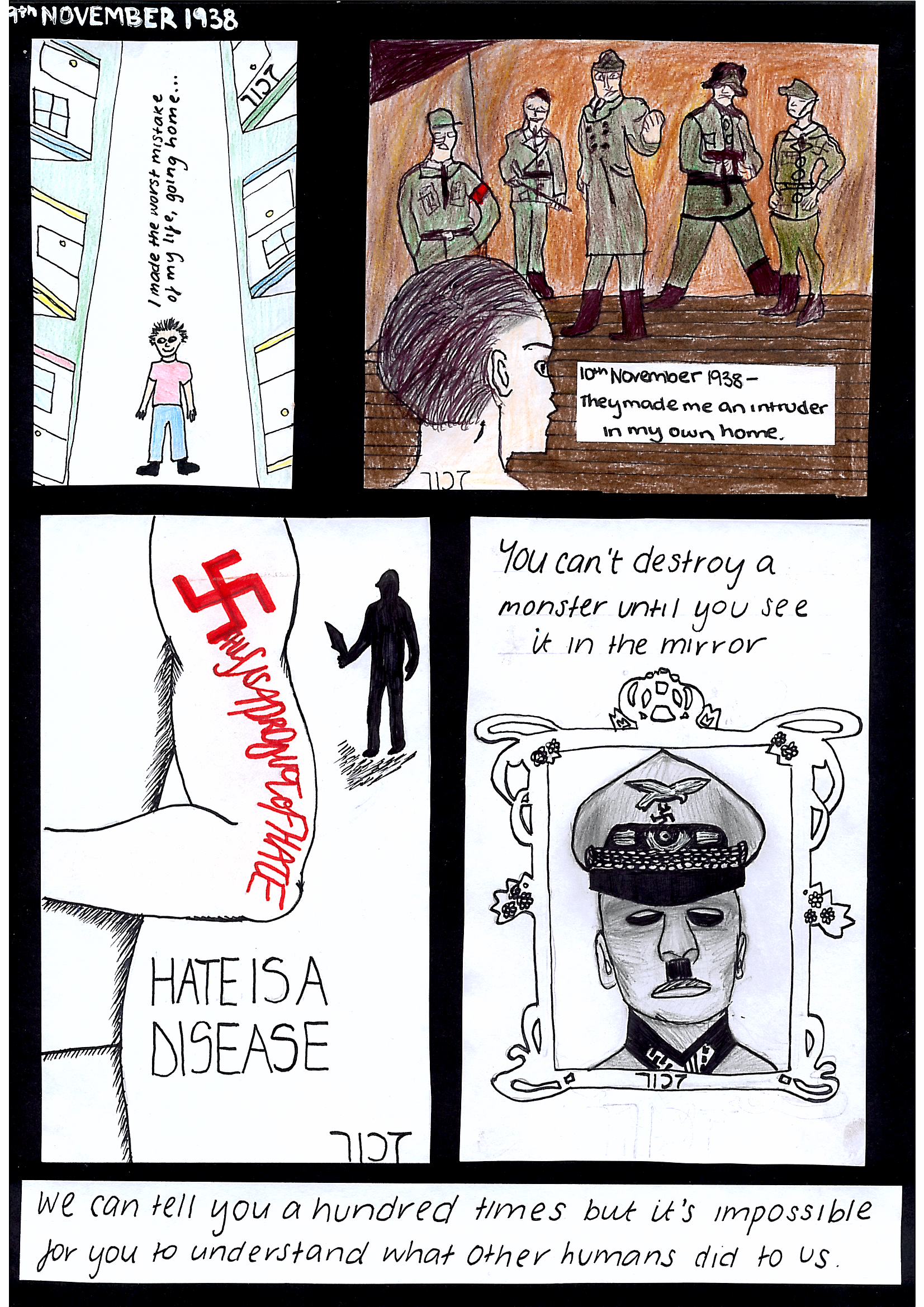
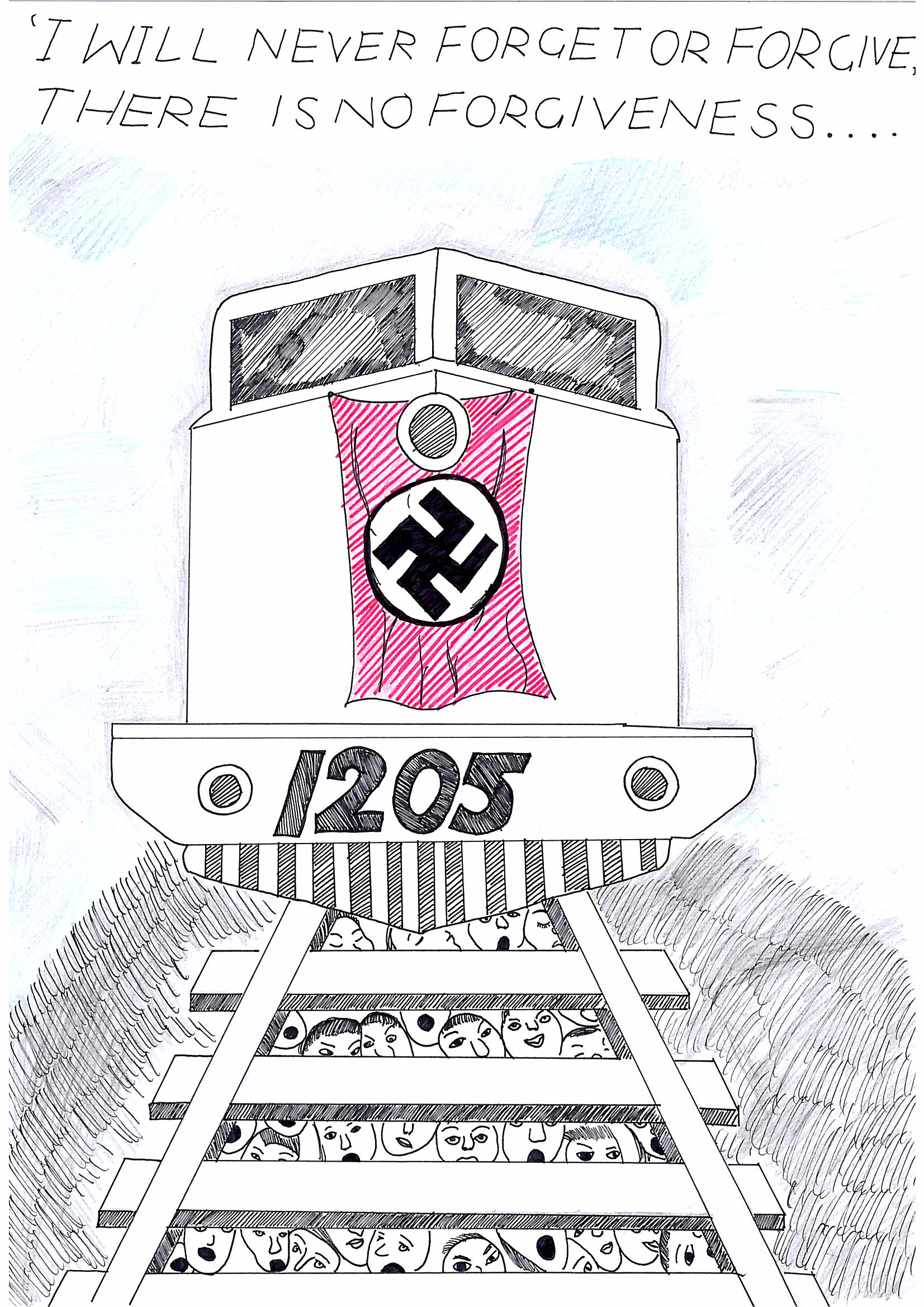
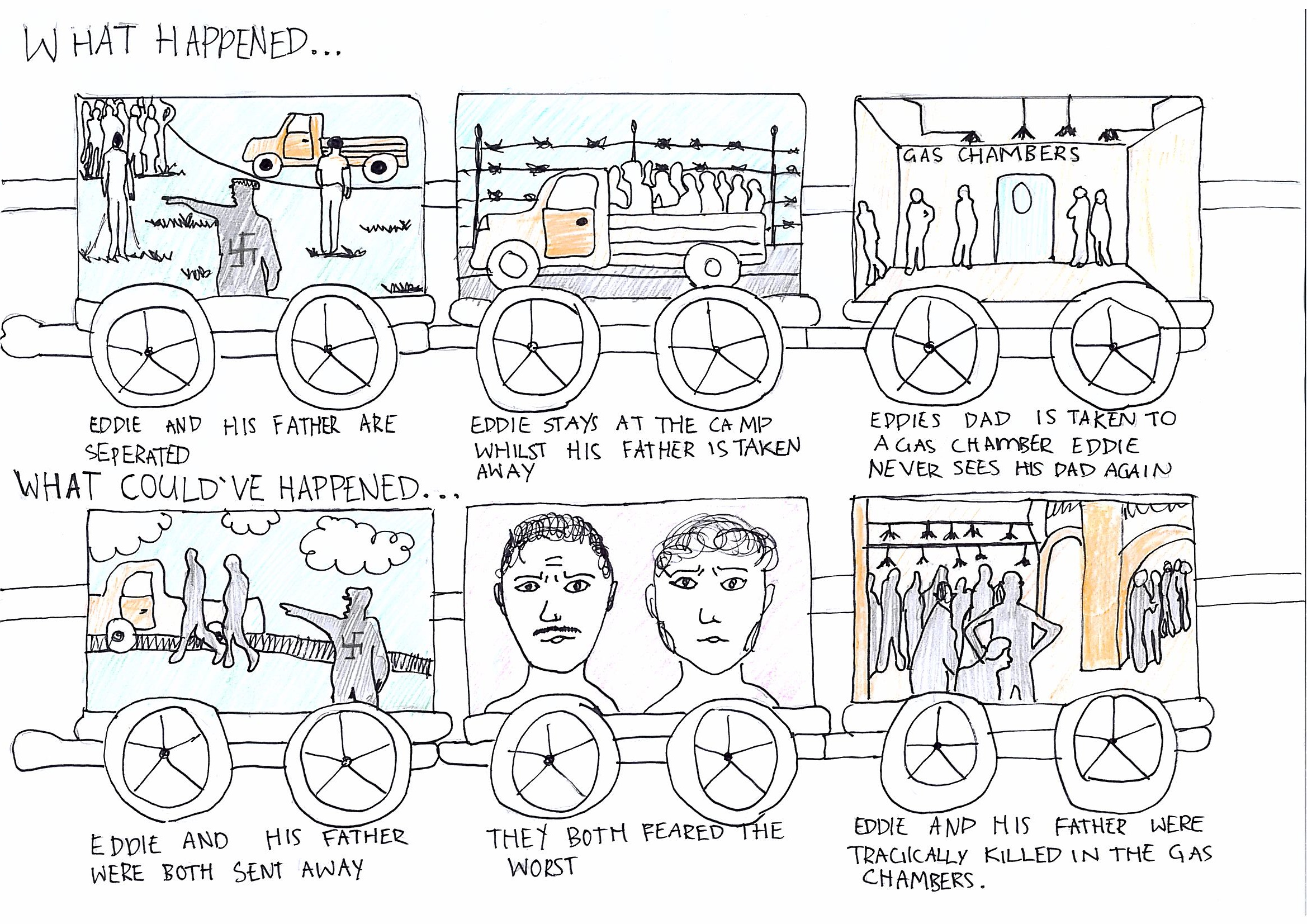
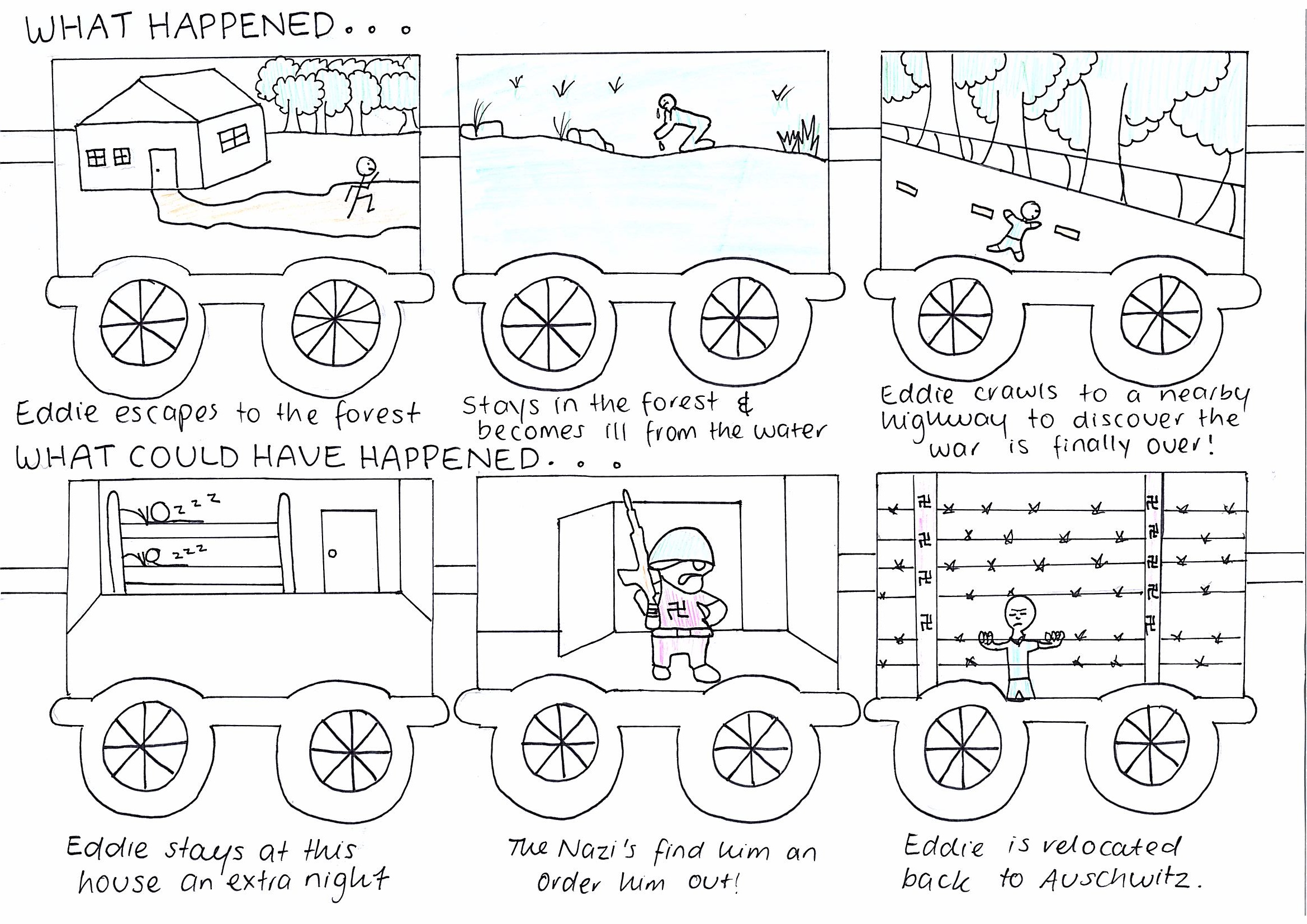
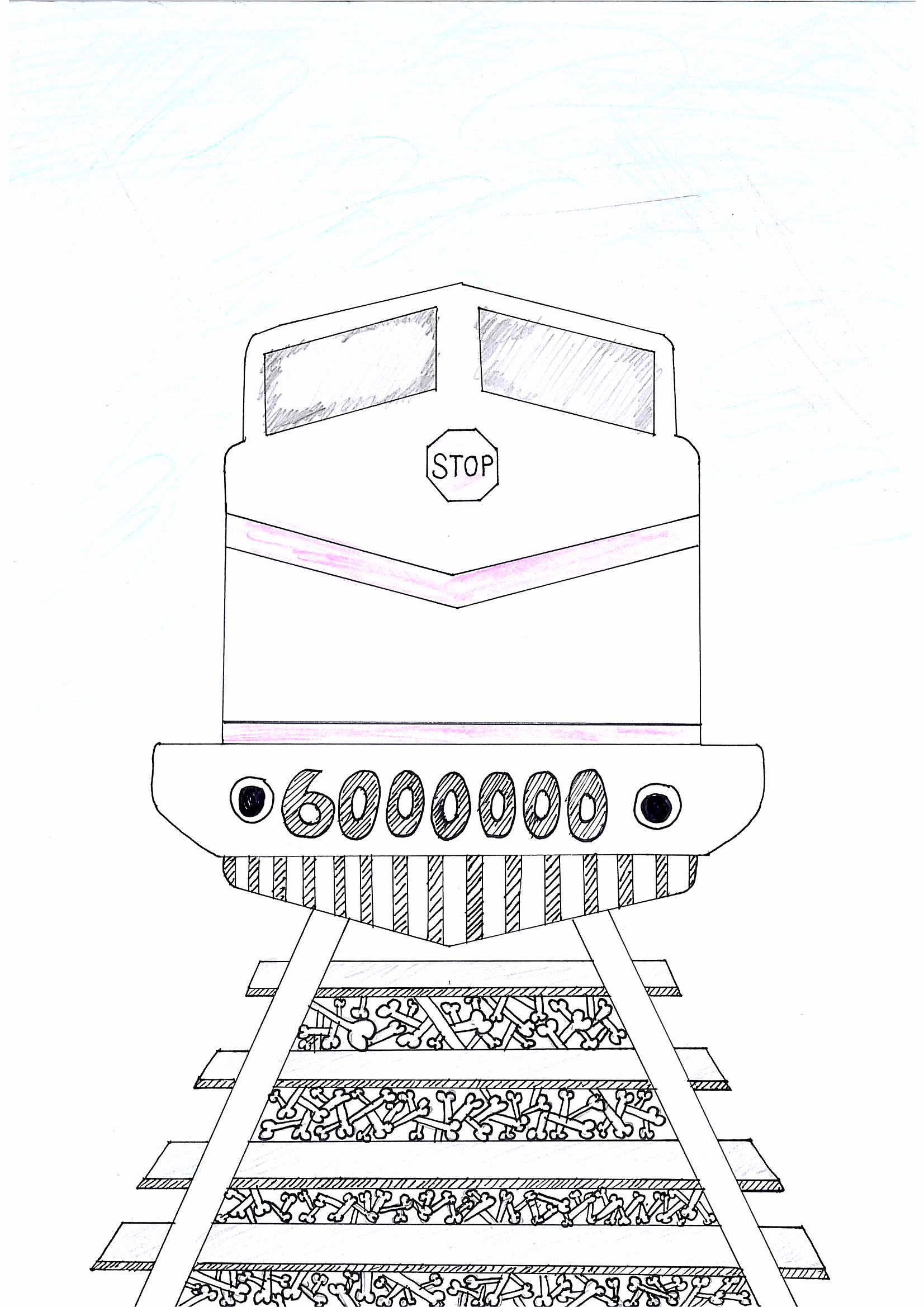
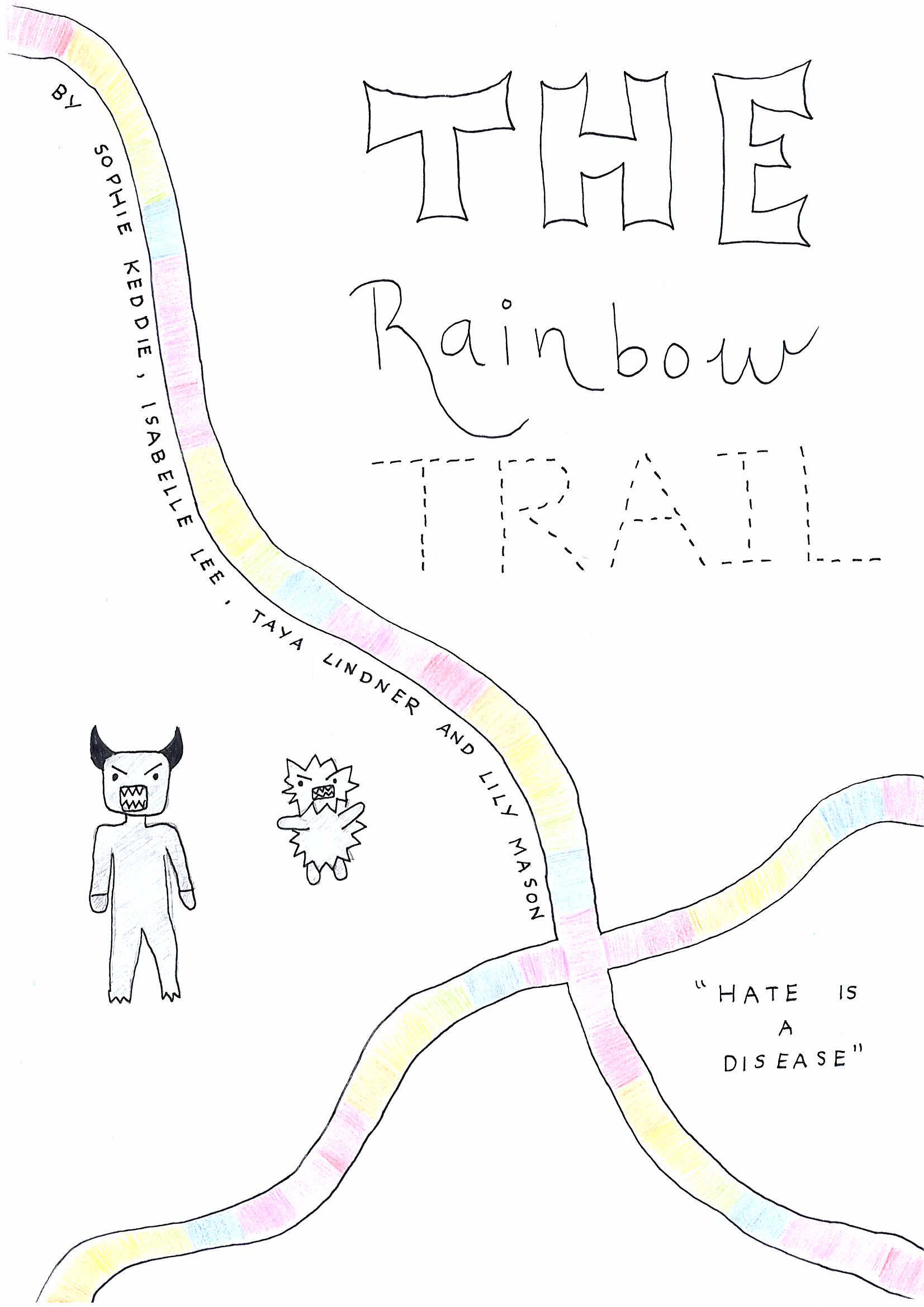
For this year’s Design Thinking day, the Museum commissioned Year 10 students from the Wenona School to create a graphic novel strip based on the testimony of Holocaust survivor Eddie Jaku.

They have written about their experiences and shared some of their work below. With thanks to girls and their teacher Luke Simkins for these incredible renderings of a very special life.

group-4-front-cover

group-4-comic-strip

Rebecca Karnani

On the 14th and 15th of November Year 10 of Wenona had the honor to hear and interpret Eddie Jaku’s story and recreate it through a graphic novel. We firstly were fortunate enough to hear the history of graphic novels and their connection to the Holocaust. We were given a brief to create a short graphic novel to depict Eddie’s story. To help with this, we watched Eddie’s testimony to inspire our creations. We were then given time to collate and create our graphics. This was a very meaningful experience for me as I both love modern history and I have family connections to the Holocaust. This activity motivated me to read more about my family’s past and to learn what my ancestors had to endure during the Holocaust. I think that it is important to make survivors testimony available for a range of age groups in a range of mediums. I believe that by making these testimonies accessible it teaches people the wrongs that have been committed in the past which hopefully prevents them happening again in the future. Overall, this was an eye opening experience and we all hope Eddie will enjoy our creations.

group-25-front-cover

group-25-page-1

group-25-page-2

group-25-back-cover


Rose Bauer

Throughout 2016, Year 10 have visited the Sydney Jewish Museum and met a couple of Holocaust survivors, namely Eddie Jaku. Eddie has recounted his harrowing history of surviving Auschwitz, the loss of his parents and the brutalities that he faced whilst under the oppressive Nazi Regime during the 1930s and 40s. However, he has never formally written down his testimony or put it on the record books for many different reasons.

In light of this, on Year 10’s Design Thinking Days, we were tasked with depicting certain aspects of Eddie’s story in the mode of a Graphic Novel. We had to be mindful of how we were representing Eddie’s story and how best to do that in this medium, as it was such a powerful source of hope for those during WWII with publications of superheroes such as Superman and Captain America.

Year 10 spent two days creating these novels, attempting to adequately convey Eddie’s story so that it may be carried on for generations. His messages of never hating, but never forgiving or forgetting have had a resounding impact on Year 10. We will never forget him.

group-17-front-cover-002_page_1

group-17-comic-strip

‘Jewish Wizards’ and where to find them

‘Jewish Wizards’ and where to find them

Throughout pre-modern history, death was a familiar visitor in the home. Even as late as the 18th century, poorer families in Europe could expect that at least half of their children would not survive childhood. Accustomed to loss, religious Jews developed a range of beliefs that explained the tragic onset of illness or the sudden death of one’s loved ones, and many of these had to do with fears of witchcraft.

While foreign concepts to Jews today, our medieval ancestors believed in a host of supernatural forces both malignant and benign. Legions of angels fought against armies of demons for the possession of every person, and between our world and the other stood practitioners of magic who could intercede. Where many saw the sages of our tradition as the mystical representatives of God, through whom divine beneficence flowed to earth, they also recognised the existence of wizards and witches who intervened for the forces of evil.

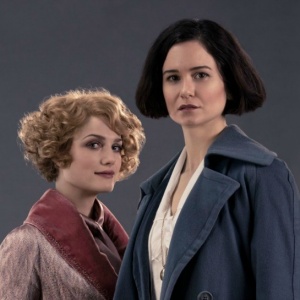
tina_and_queenie

Tina and Queenie Goldstein, from Fantastic Beasts and Where to Find Them.

The Talmud and the midrashim are saturated with references to such sorcery: how it was performed, who was responsible for it, and what the pious Jew might do to protect herself from its curse. Our literature speaks of mind-readers and necromancers, people who converse with animals and people who predict the future from innards and dreams. It speaks of incantations, amulets, potions and magical rites, all designed to ameliorate the ill effects of the satan’s power and of his wicked emissaries on earth.

We are told of how to prepare mystical ointments that might be rubbed on the eyes to reveal the presence of demons. We are informed of how to properly write an amulet that we may protect ourselves from the mumbled curses of a nearby witch. We are warned, on frequent occasions, of where we should and should not travel in the evenings, and we are enjoined to place certain biblical verses beneath the pillow of a woman in labour.

People might shrug such passages off as idle superstition, but they were as present a part of pre-modern Jewish life as any other, and their reverberations are felt even today. The mezuzot that we fix upon our doorposts have their origins as amulets. The prayers that we recite before going to bed were originally meant to protect us from the power of demons. The shofar that we blow in the days leading up to Rosh Hashanah was intended to confound the satan, the constant study of Torah was supposed to forestall death and the song that we sing on Friday evening (Shalom Aleykhem) was to ensure the continued company of ministering angels.

In the 12th century, Maimonides courted controversy with his conservative contemporaries by disparaging such beliefs as illogical and absurd, and by providing more “rational” reasons for Jewish custom and law than those that are presented in the Talmud. But one need not be a mystic to feel moved by stories of the supernatural, nor to find wisdom in such tales. However rational or scientific we may be, we should be careful not to forget the colourful origins of so many of our traditions. Fairy tales, after all, are some of the most pregnant vehicles of cultural truths.

Author: Education Officer, Dr Simon Holloway.


The League of Nations

The League of Nations

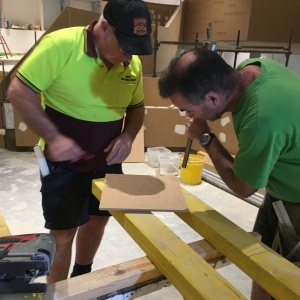
The saying goes that it takes a village to raise a child, and at the SJM it has taken a league of nations to build our new exhibition.

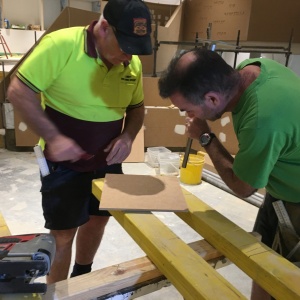
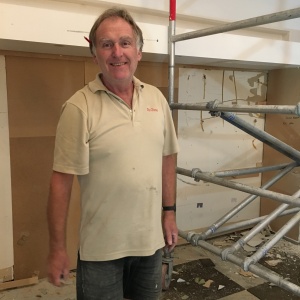
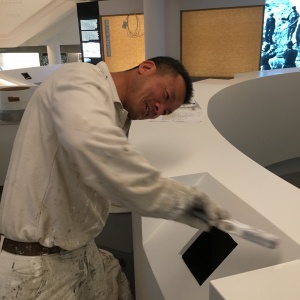
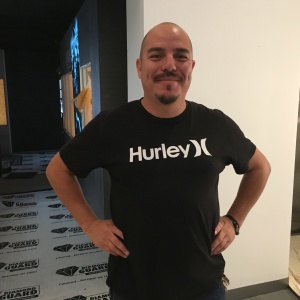
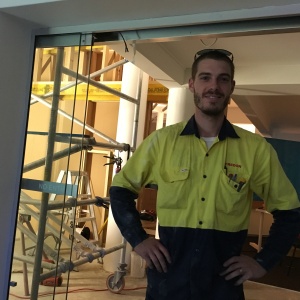
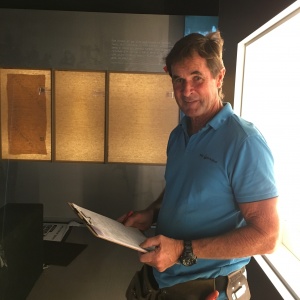
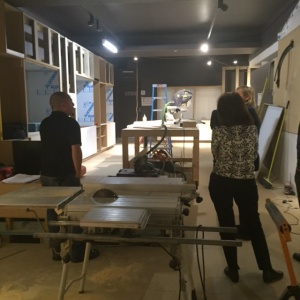
From Australia, Canada, China, Chile, England, Germany, Ireland, Korea and Scotland, a team of tradies (and Museum ladies) have been frenetically sanding, drilling, cutting, refining, polishing, painting and positioning.

This photo blog offers you a glimpse of the faces, spaces and (places) behind the new exhibition.

tom-and-jerry

Tom (with Jerry) is a carpenter, from Scotland “I’m a Scotsman but I’ve never worn a kilt” he tells us. “I like the security at the Museum. Sometimes on a building site you have to pack away your tools at lunch time; here you can be gone all weekend and leave your tools they will still be here.”

Stefan - carpenter from Germany

Stefan – a carpenter from Germany.

Ming - Painter from China

Ming – a painter from China

Rodrigo Ibarra – SJM building manager, from Chile

Rodrigo Ibarra – the SJM building manager, from Chile.

Grant - the electrician, fondly referred to as ‘Sparky’ (Australian born of Italian heritage)

Grant – the electrician, fondly referred to as ‘Sparky’ (Australian born of Italian heritage)

Greg from Lamond Building – specialist in museum fitouts

Greg from Lamond Building – specialist in museum fit outs. Basically the most Australian bloke you’ll ever come across.

Philip – made all the custom made elements for the installation of objects

Philip – who custom made elements for the installation of objects

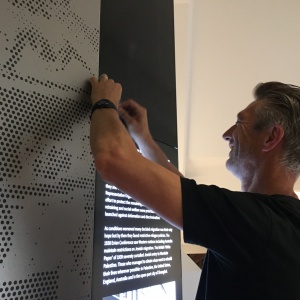
Matt – from the Signage company installing the graphics (“it’s been an intricate, complicated job”). Matt started as a screen printer in England, came backpacking to Australia and never left

Matt – from the Signage company installing the graphics. Matt started as a screen printer in England, came backpacking to Australia and never left.

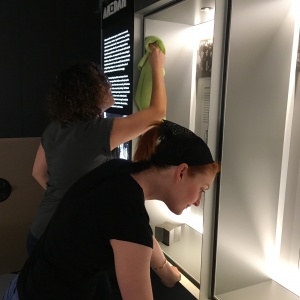
No job is too big or too small for Marie and Sarah - our highly qualified researcher and educator, helping out with the cleaning

No job is too big or too small for Marie and Sarah – ( an educator and human rights lawyer respectively). Here they are helping to clean the dust from display cabinets before objects are installed.

Tess – the conservator, has prepared around 300 artefacts for display

Conservator Tess, has prepared around 300 artefacts for display – seen here with some you might just recognise.

Author: Roslyn Sugarman, Head Curator.

Still too busy to blog…

Still too busy to blog…

It’s not unusual these days to see our curators caked in dust, ferrying wads of paper around and consulting with construction workers.

In lieu of a written update, Head Curator Roslyn  has been busy photojournaling on behalf of the upgrade team.

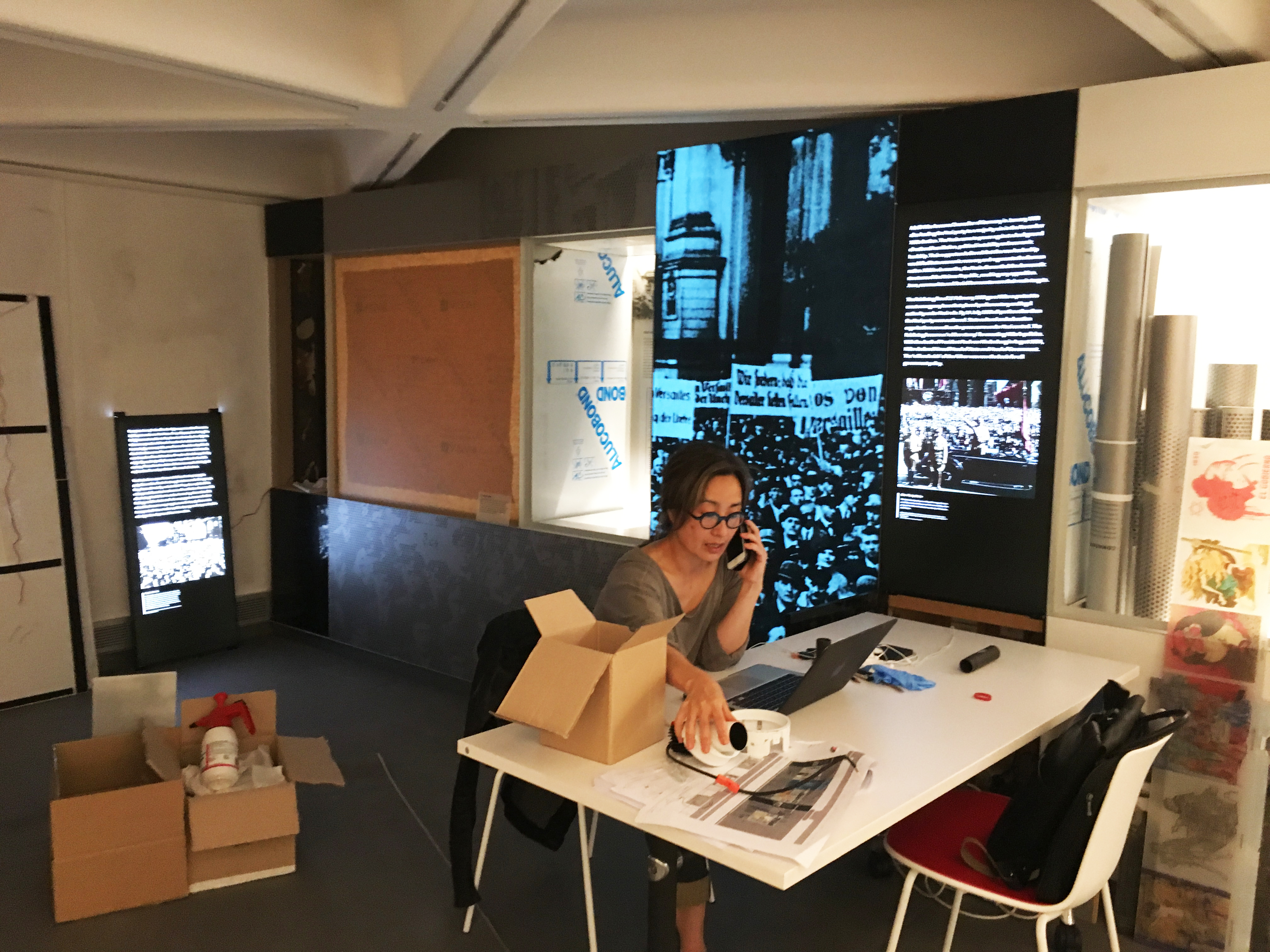
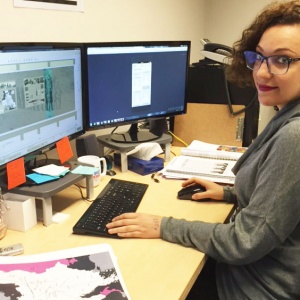
Designer Jisuk Han in her makeshift Museum office.

Designer Jisuk Han in her makeshift Museum office.

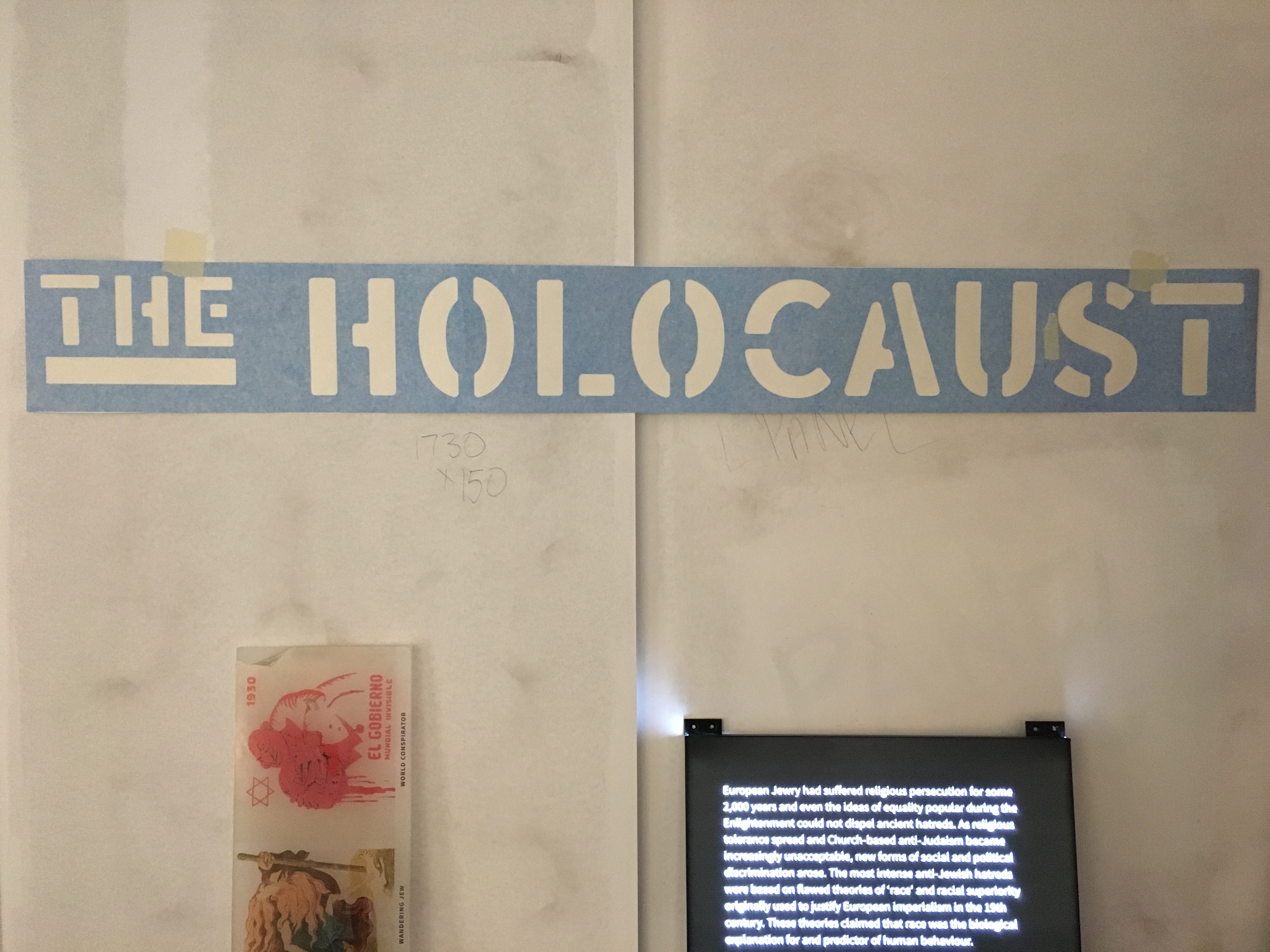
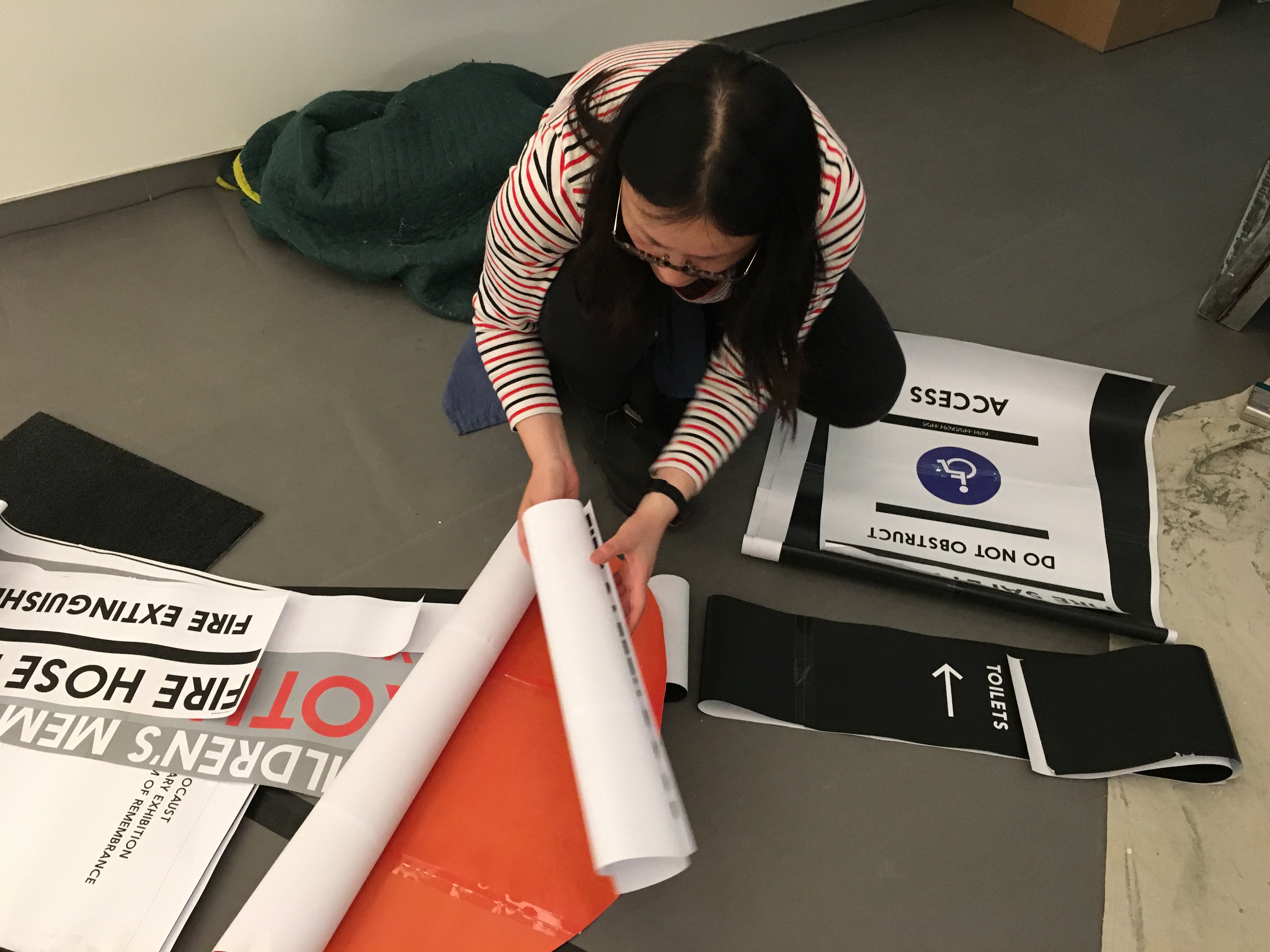
Exhibition signage

Exhibition signage

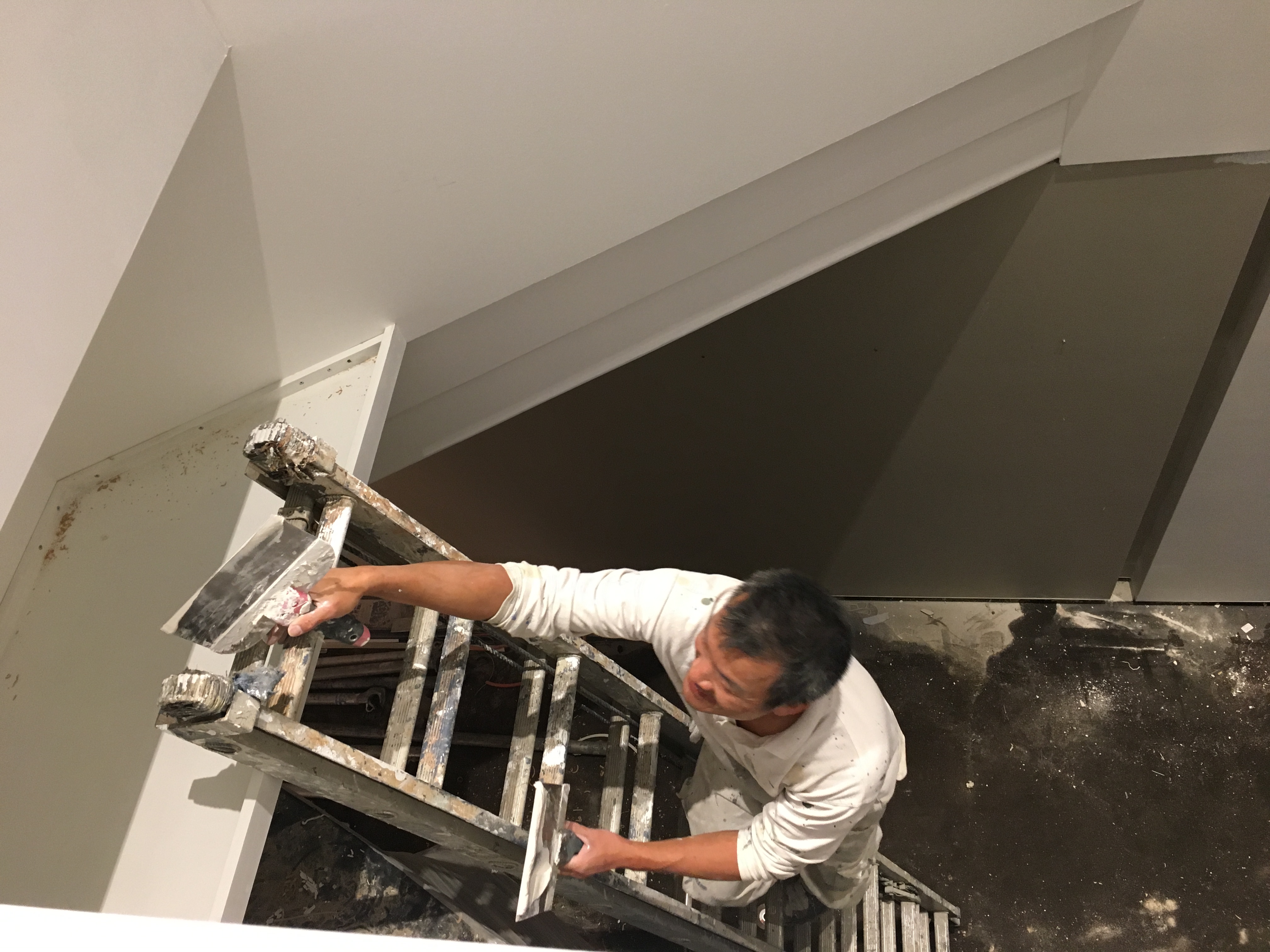
Painters adding a fresh coat of paint.

Painters apply a fresh coat of paint.

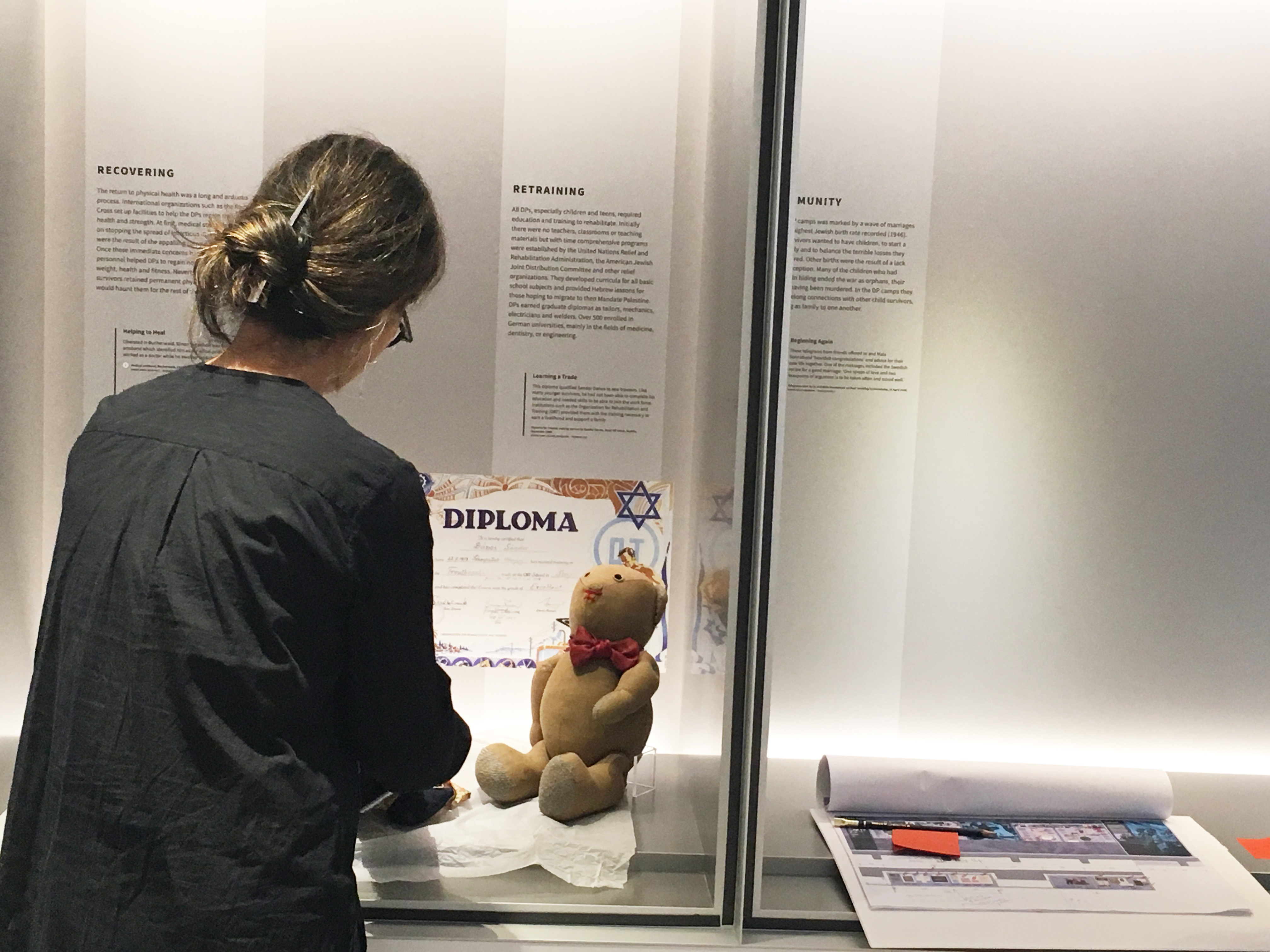
The first test-run of the new showcase.

The first test-run of the new showcase.

Designer Haimeng testing fonts and sizes for Museum signage.

Designer Haimeng testing fonts and sizes for Museum signage.

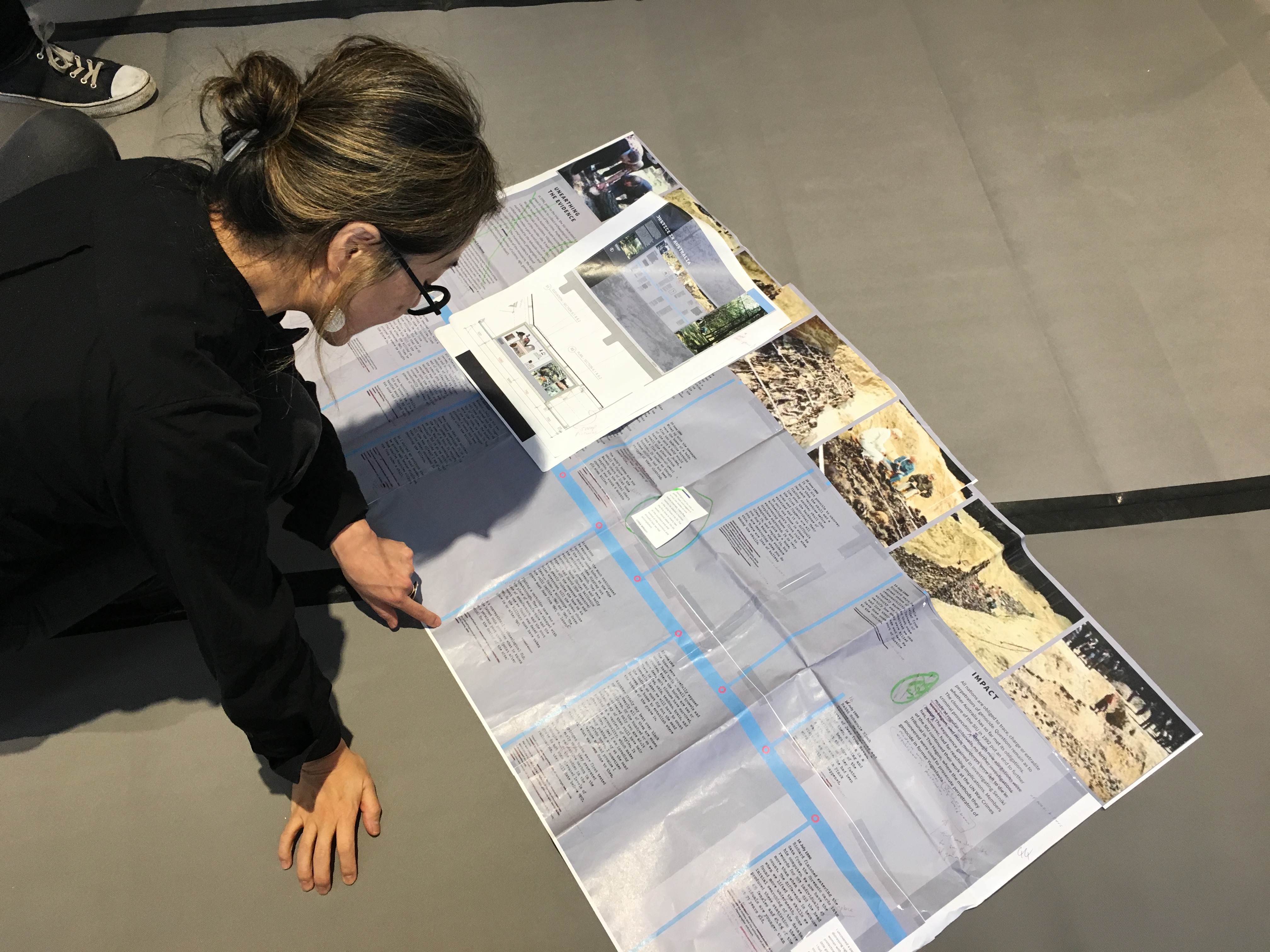
Designer Jisuk consults her plan for the Sirniki section.

Designer Jisuk consults her plan for the Serniki section.

Flagging imperfections

Flagging imperfections

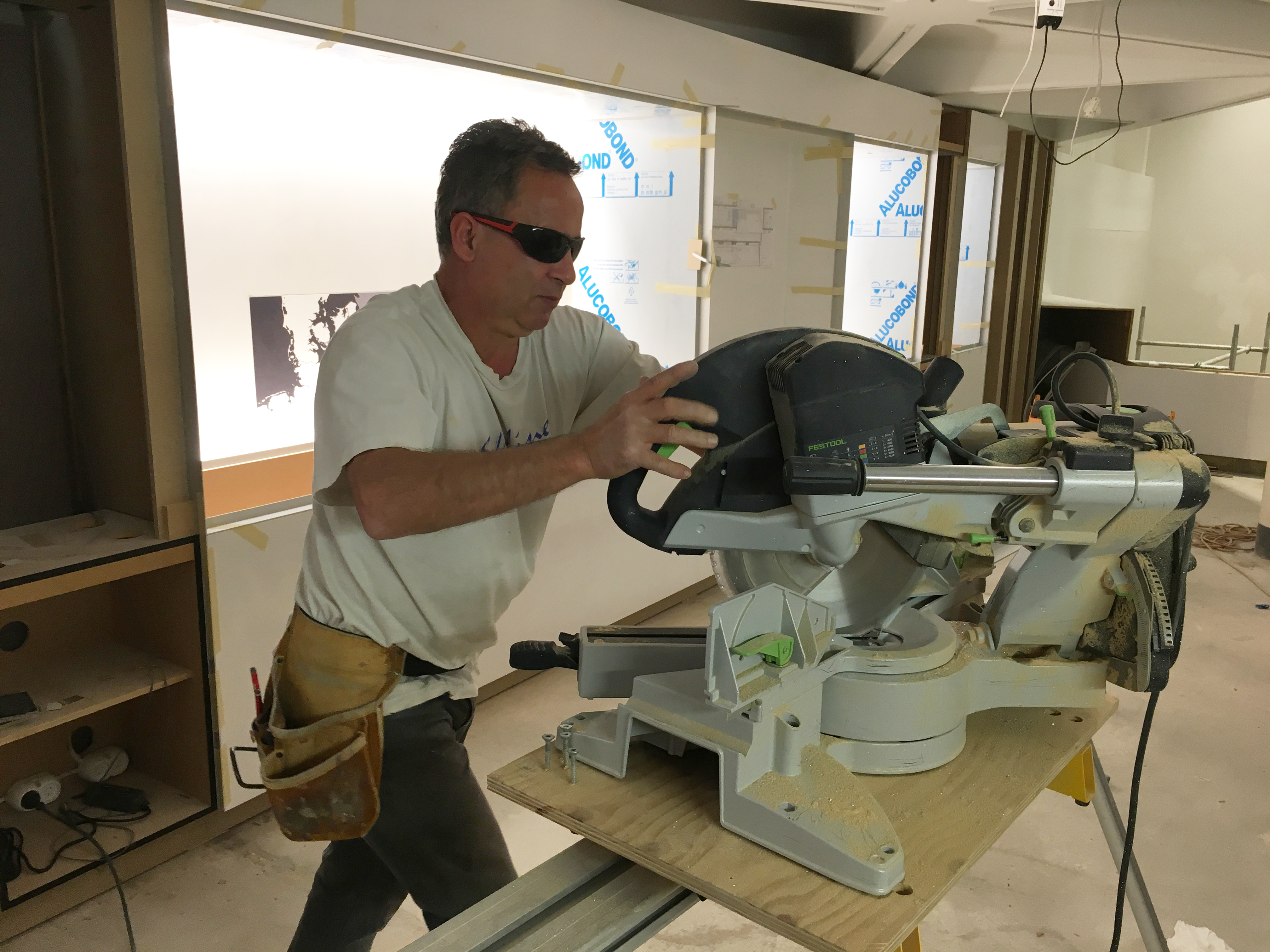
Builders hard at work

Builders hard at work

Vale Edith Szanto

Vale Edith Szanto

I met Edith more than ten years ago one Sunday morning in shopping centre of all places. There she was, sitting next to me as I had my coffee, this beautiful elderly woman, writing intently. As I left, I asked her if she was writing her story. And so began our friendship with its regular meetings in our coffee shop and over time, Edith entrusted me with her three blue exercise books, handwritten in Hungarian.

At that very first meeting, I asked her what she was writing about that day. She was recalling her father returning to Hungary from the WW1  and how on that day, her life as a six year old changed because her father, whom she could barely remember, moved into her mother’s bed and she was exiled forever from it. It took her years to reconcile with this stranger and her most intimate memory of her father was sharing a cigarette with him in the wagon on the way to Auschwitz.

When I asked her why she was writing her story, she replied so that she would not disappear without a trace and something would be left of what her life meant to her. Edith died on 18th April 2016 at 102 years of age. And she has left a trace of her remarkable life, a life that spanned almost the whole of the 20th century.

At the Sydney Jewish Museum, we decided we would publish Edith’s story Reminiscence and Peter Gyenes translated it. His commitment to her story was so extraordinary that he even bought a Hungarian keyboard so that he could type her story in the language in which it was written.
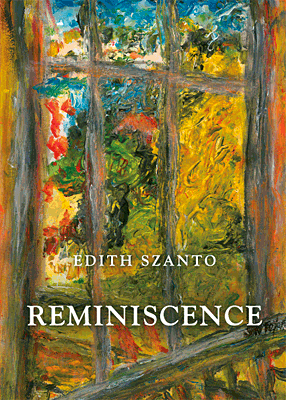
edith-santo_cvr

It is a story that reaches back into old Hungary and a girl growing up between the wars. She is intelligent and articulate, artistic and sophisticated. It is the story about the closing down of Jewish life and how that impacted on one individual girl, a girl for whom her Jewishness was not a defining feature of her life. Until it was the most important feature. Edith trained as a graphic designer and had some naively happy times designing dresses for fashion boutiques and ‘living as a respected member of society’. Suddenly the veil was torn away and she had to face the reality of German occupation of Hungary.  She had fallen in love with Laszlo Rosenberg, a young composer and discovered a world of music through him. They were married in May 1944 and he was sent off to a labour camp together with her young brother Janos.  At 90 she still remembered the pain she felt waving goodbye to him on the tram. He died at 32 years of age of typhoid.

During these recent years, when for some of them she was lost in the mists of time, she would look constantly at the photo on her wall of her parents, and she would retell the moment of anguish when she saw them and her extended family for the last time. That moment of separation was as they disembarked in Birkenau. It was her mother’s birthday, the 2nd July, 1944.

Her impeccable German and her drawing skills saved her and she was sent to a munitions factory in Haberstadt in what was then Germany. And perhaps it was her beauty too as one of the German officers was sweet on her. Liberated by the Russians in May 1945, she began the dangerous journey home to Budapest, hoping to regain her life. The only family members left were her old aunt Ilonka  and miraculously her much younger brother, Janos. Thirteen years her junior , Janos had survived the labour battalions.  But there was no one else.

Edith writes, ‘We lived in total uncertainty like savages for quite a while, but we were young and compared to past horrors, we were happy to be living at all….  The days passed with the joy of life, laughter, flippant carelessness. Single women and men looked for each other’s company, we wanted to forget the dreadful suffering and totally abandoned ourselves to the free world, devoid of fear. That was what we thought!’

Edith now re-met Istavn Szanto (Pista), who had been a witness at her first marriage. Pista had lost his wife and newborn daughter in Auschwitz. Miraculously they fell in love.  ‘We had to forget our bitter torments if we wanted to live a normal life…. We became younger, our faces lit up , the sad wrinkles disappeared. We held each other’s hands which gave us strength and we believed in a better future.’  They were married on 4th June 1948.

Edith’s ensuing pregnancy was sadly ectopic and she was never able to ‘fulfil her biological destiny ‘as she would tell me. This was a cause of great regret to her in her long life.

Life under the Communist regime in Hungary became increasingly dangerous for them with Pista designated a ‘class enemy’, despite being  reduced to‘ Dr Istvan Szanto, labourer’ on his identity papers because of his association with the Socialist Party. Edith was drawing propaganda posters for the Communist Party, with a good future ahead of her, but life was increasingly fraught. They lived with ‘bell fright’ and the daily fear of being deported. When the Russians troops invaded and her brother, who had been involved in student protests, was in danger of being deported to Russia, the decision was made to leave Hungary immediately. Leaving her little dog Kuksi behind continued to haunt Edith more than 60 years later.

Fleeing as a family group of five (Edith, Pista, her brother Janos and his wife and their three year old daughter, Suzi) they made their way across the border to Austria and then finally to Australia. Edith ends her memoir ten years ago with, ‘On 31st August I will be 92 years old! I’m still walking every day to drink strong coffee in Chatswood Chase, sitting at the same table, thinking about the past.’

Not quite. After the inevitable fall, her niece Suzi had to move Edith from the family home she had shared with her brother and his wife the whole time they lived in Sydney to a nursing home. Pista had died six years earlier and Edith could no longer manage the stairs and caring for herself.  I tried to persuade her to move to Montefiore but she carried with her the fear of being identified as Jewish. When I took her matzah in her Uniting Church nursing home one Pesach, she had me hide it in the cupboard, fearful someone would know she was Jewish.

Our outings became more circumscribed but we still managed visits to the New South Wales Art Gallery coordinated by a friend who works there. We would begin with a coffee in the café and as always, it would not be up to scratch. No coffee was ever good enough to compare to Hungarian coffee. I loved wheeling her through the gallery and hearing her very forthright comments about the paintings. She was not diminished in her critical capacity. But when she saw something she loved, she delighted in its beauty. And then she would return to her room, surrounded by soft animal toys and photographs.

The last long years were very hard for Edith. Suzi was an attentive and caring niece, but Edith could no longer paint and she felt the burden of being ‘useless’ .  This for a woman who had worked her whole life. Her hearing became harder and while she could read, one could communicate with a mixture of writing and talking. Her beloved brother was admitted to the same home with dementia and that was another great sadness for her. He was so much younger than she was but no longer knew her. So when she died on the 18th April 2016 I was very glad that she was buried next to Pista at Macquarie Park and despite the many years of no Jewish connection, that she finally has a Jewish resting place and that there is a place to leave a stone in remembrance.

Author: Lucy Chipkin

Note: Reminiscence is available for purchase at the Museum shop or on the Museum website. 



Inside the autograph book

Inside the autograph book

page-1 page-2

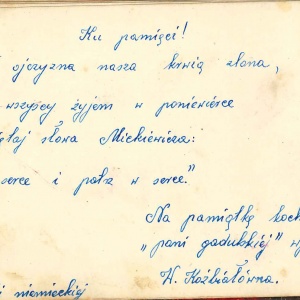
The autograph book above was donated to the museum by Yola Schneider (nee Rawdin). It was presented to her new, at the school she attended in Piastów, Poland following liberation in 1945.  The book, which records the well wishes of classmates and friends, accompanied Yola to Warsaw, Berlin, Aschau, Munich and later to Australia. It is, in essence, a map of her post-war experience; documenting both the complexity of displacement and the possibilities lay bare by hope and friendship.

Each of the entries is unique and personalised in some way, either in its use of drawing, language, script or the familiarities of Yola’s nicknames.

In May 1945, a fellow classmate in Piastów wrote:

For Remembrance,

Love is a wonderful flower. Envy is poisoned plant.

Beware, girl like fire; it should not creep into your heart.

For the chatterbox,

Tysia G. 

The reference to ‘chatterbox’ acknowledges Yola’s propensity to talk. In hiding for two years, she was often left for the entire day alone in a room, waiting for her Mother to return from working as a housemaid. The loneliness, curtailed somewhat by her library books, found its eventual outlet:

“I was very talkative when I started to go to school. I never stopped talking because I was sitting by myself for two years with nobody to talk to, no children to play with. So when I started to talk…I never stopped; I was forever getting into trouble” (Shoah Foundation Testimony).

page-3 page4

The messages vary in sentiment; some remind Yola to be wary of the new and alien world, yet most are optimistic and convey wisdom of experience far beyond that expected of children. These children however, were survivors of extraordinary times; each with their own story, many of which were not yet committed to history at the time they wrote in Yola’s book.

Another entry from Piastów reads:

For Remembrance,

Laugh amongst people; cry only in hiding; be light dancing, but never in life!

For nice, although talkative, Jola

Danka Przybysiu

In this entry, as in many, Yola’s classmate uses illustration to convey memory and embed remembrance. To be remembered is a pervasive theme, particularly amidst the confusion of loss, and struggle to rebuild lives. In many instances, the childlike illustrations juxtapose the gravity of the written message.

Author: Curator, Rachel Mensforth.

A timeless tale of Viennese Cuisine

A timeless tale of Viennese Cuisine

As a rule, the Sydney Jewish Museum Curators are discerning about books accessioned into the collection.  Most donated texts are redirected to the library, unless they are particularly rare or of interesting provenance. This week however, we accessioned a wonderful object with a history anchored in pre-war Austria; its story sheds a light on the traditions and culinary customs of Viennese cuisine, many of which are cherished and practiced up to this very day.

m2016-035i

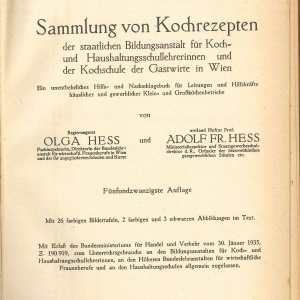
This is a cookbook from Vienna called ‘Wiener Küche’, which translates simply to ‘Viennese Cuisine’.  This text, which has endured the test of time and is still considered a foundational example of Viennese cookery, was written by Olga and Adolf Hess and printed in 1935.  It belonged to the late Elsa Philipssohn and was donated by her son Peter Philipssohn. Elsa and her sister, Greta Menkes, brought the book with them from Vienna in 1939.

m2016-035c            m2016-035a

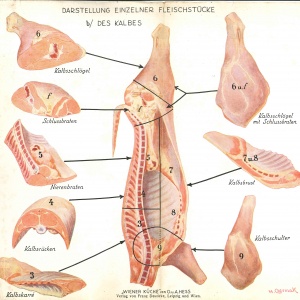
Within its 800 pages are written recipes for many of Vienna’s most loved traditional dishes. According to the introductory page, Olga and Adolf wrote the text in association with ‘The State Educational Institution for Cooking and Housekeeping, School Teachers and Cooking School of Restauranteurs in Vienna’.  Along with recipes for strudels and schnitzels, the reader is provided with advice on nutrition, cooking for the sick, preparing a menu and thrifty economy tips for running the home. When first printed in 1916, the book was part of a growing trend across Europe and the United States, whereby writers were contending for the market in an effort to consolidate the national palette. Appealing primarily to the urban housewife, these texts provided a manual for home and cookery, but within a national context.

m2016-035iv

Following the incorporation of Austria into Germany, otherwise referred to as ‘Anschluss’, in March 1938, the national identity of Austria shifted. For Jewish people, many of whom were completely assimilated into Austrian society and culture, the exclusion from everyday life and activities was intolerable and increasingly dangerous. Elsa Philipssohn and her sister Greta Menkes arrived to a new life in Australia in early 1939.  They represented the half of the Jewish population in Austria that had escaped the Nazi’s and emigrated by May, 1939. Among their possessions was a 1935 printed copy of ‘Wiener Küche’; a book which up until this day, attempts to embody the national character of pre-war Vienna.

Author, Rachel Mensforth, Curator Collections.

Professor Michael Berenbaum

Professor Michael Berenbaum

It’s been wonderful having Professor Michael Berenbaum at the Museum this week.  For those of you who don’t know him, he is a preeminent Holocaust historian maybe best known to people like me as the Project Director who oversaw the creation of the United States Holocaust Memorial Museum in Washington DC.  There is hardly a Holocaust Museum which he has not consulted.  We were very fortunate to have him peer review the text for the new Holocaust exhibition.

Over the last week he has given us much food for thought.  One area that we regularly debate is how graphic material is shown (if at all) and this has been particularly topical following Professor Berenbaum’s talk on the Sonderkommando. We are constantly discussing how much is too much, particularly when determining what is appropriate for students and younger visitors.

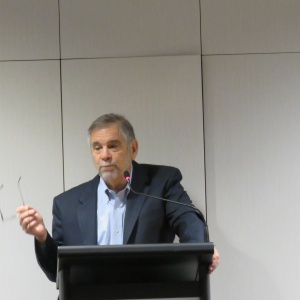
Professor Michael Berenbaum speaking at the Museum.

Professor Michael Berenbaum speaking at the Museum .

Berenbaum’s main advice for us was that graphic material should not be voyeuristic and should not demean the victim further by showing it. I was most surprised to learn that the advocates for each side were reversed between our institutions.  At the USHMM the survivors wanted graphic content hidden and staff wanted it exhibited while in general staff here are often more cautious and its the survivors who advocate for more graphic material.

No area was more hotly debated than the content and display of the three exhibition films. Some footage will be on small monitors, some will be projected almost two meters high and some will be available in contained spaces.  The display of this material is very important and a key part of what Professor Berenbaum advised.

The film screening in the Ghetto section is almost two meters high and dominates the space.  This film shows war footage as countries are invaded and the persecution of the Jews that followed.  Here we chose not show some of the more graphic footage from The Warsaw Ghetto for example, not because we think it’s inappropriate (there is much worse on display) but because having it projected at such a large scale felt voyeuristic and we felt a duty of care to our younger visitors.

The liberation footage is probably the most confronting, particularly the colour footage from the liberation of Dachau.  This will be screened in the theatrette to the side of the exhibition.  Not particularly hidden or small but avoidable is one so wished.  Surprisingly, the USHMM shows this upon entry to the museum albeit on a significantly smaller screen.  This footage is among the most confrontational I have seen and deciding to include it was difficult but we felt it was necessary.

I think we have struck a good balance.  There is significantly more challenging material on display.  I believe we chose to use it in a way that is educational and furthers our visitors understand this history.  I think we have also been sensitive to the needs of our visitors and mindful that it can be confrontational.

Author: Shannon Biederman, Curator

Behind the scenes

Behind the scenes

The Museum is still an active building site filled with scaffolding; carpenters and builders, painters and electricians are everywhere. The exhibition designer, Jisuk Han, is checking specifications, making minor adjustments and making sure that everyone is keeping to the deadlines.

IMG_6124

Carpenters at work

It is a hive of energy.

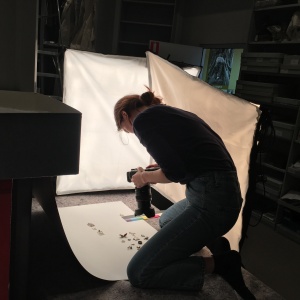
The archives has turned into a make-shift studio as the photographer sets out her lighting and backdrop, ready to photograph all the artefacts to be used on exhibition. We are looking to photograph familiar artefacts in a different way.

CONSERVATOR AND DESIGNER WORKING OUT BEST WAY TO DISPLAY OBJECTS

Conservator and designer working out the best way to display objects

I think it could be the first time that the photographer has had to photograph items from a concentration camp – a blanket made of human hair, a halved head scarf and a pouch made from scrap materials. I explain the significance of the latter two humble, seemingly ordinary artefacts. The scarf, exchanged for a slice of bread, was worn to cover the donors shaved head as a way of maintaining dignity in an otherwise inhumane environment; the pouch was used to secretly hold a letter and a photo.

Archives turned into a photographic studio.

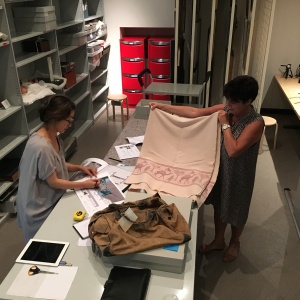
Behind the scenes, meetings with the conservator have taken place to discuss conservation and preservation of the artefacts. The long-term longevity of documents and fragile textiles really concerns me – fading is a reality and I have seen visible evidence of fading due to too much exposure to light over extended periods of display.

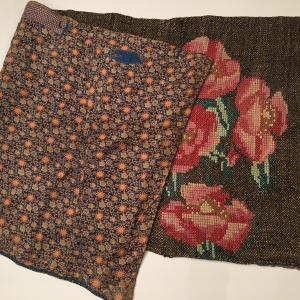
This morning, while examining a cross-stitch blanket donated in 1993 I made a discovery (the kind of discovery that makes curators excited!) We had always known this object as a blanket, but on closer inspection of the back, I noticed a button hole and fabric strip to hold a belt. Else Schwartz must have worn her ‘blanket’ of comfort as a cape.

THE CROSS STITCH BLANKET WHICH TURNED OUT TO BE A CAPE.

The cross stitch blanket, which turned out to be a cape.

During the lonely hours of waiting for her husband and sons to return from the camps, Else made this item; each stitch represents a prayer for their return. They never did return.

Author: Roslyn Sugarman, Curator.

Too busy to blog…

Too busy to blog…

“Too busy to blog” –  so say our indomitable re-development team who are currently in the bowels of the building making final changes to the exhibition text.

In lieu of an insightful blog post, they sent photographic evidence attesting to their toil and hope that this suffices for the week. Until next time then!

IMG_5393

IMG_5398

IMG_5416

IMG_5422

IMG_5423

Author: Natalia Thomas, Marketing Manager

Photo Credits: Marie Bonardelli, Education Officer & Roslyn Sugarman, Curator

Muse: Professor Konrad Kwiet, Resident Historian

Decoding ‘Digital’

Decoding ‘Digital’

Digital.

A word that is likely to strike fear into the hearts of purists and luddites the world over.

An appreciation of digital media does not have to be relegated to the world of the moustachioed, cardigan clad hipsters complete with their liberal arts degrees and single-speed bikes. Quite the opposite. It should be embraced as a democratising force. One which is finally enabling Museums to build more porous boundaries between ‘the exhibition’ and the rest of the world.
So says Seb Chan, the digital wunderkind who has been taking the Museum sector by storm. We were lucky enough to have Seb in our midst yesterday, sharing his unparalleled enthusiasm for all things cookie, code and click related.

Seb (if you didn’t know) is the bunned and bespectacled Aussie responsible for the overhaul of Manhattan’s Cooper Hewitt Smithsonian Design Museum in 2014.

Seb Chan exploring the Museum archives.

Seb Chan exploring the Museum archives.

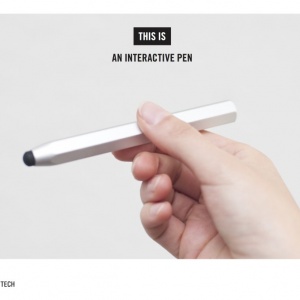
With limited resources and the eyes and expectations of America’s design impresarios upon him, Seb took an everyday object (a pen) and transformed it into a map, compass and canvass for museum visitors.

With the Cooper Hewitt pen in hand, visitors can now tap the wall description near objects, and store high-resolution photographs and exhibit information to be accessed at home following the visit.

The 'Pen'

The ‘Pen’

In the Museum’s ‘immersion room’ visitors were encouraged to design their own wallpaper, scribbling shapes and design onto a digital board and watching as their masterpieces were projected and repeated on the four walls around them – leaving their own finite mark on the small historic space.

With a few short strokes, Chan infused an age old institution with a sense of play and interactivity, rebooting the Museum for the era of constant connectedness.

So how does this relate to a Holocaust and Jewish History Museum in Sydney’s eclectic centre?

Below are just a few nuggets gleaned from yesterday’s session:

  • The potential for exploring the Museum collections are infinite. No longer will the story of an object be dictated by an expert in a 180 word label. ‘Living Software’ will allow curators to tell the story of the object in entirely new ways – guiding the visitor toward new and unknown connections (including searches that link objects by geography, colour or contemporary significance.)
  • It is unrealistic to think that a single visit to the museum will give people a lifetime of knowledge about the Holocaust and Jewish history. The most we can hope, is to ignite a spark of interest that inspires a journey of discovery – and digital technology can be a useful method of prolonging and deepening this engagement.
  • People process information differently in communal and solitary settings. The physical experience of the museum must be communal and effecting, offering opportunities for the individual to learn, debate and create.
It is impossible to answer all of the questions that the new digital age brings with it. One thing, however, is certain:  In this time of economic, social, political and environmental upheaval, we need our museums more than ever. They need to be able to reach us, speak to us and empower us long after we leave their four walls.

The future depends on it.

Author: Natalia Thomas, Marketing Manager.


74,746 words and counting…

74,746 words and counting…

74, 746. The number of words in this exhibition.

Over the past three weeks our extraordinary and indefatigable copy editor, Marie-Louise Bethune and I have poured over these 74,746 words, searching for inconsistencies, stylistic problems and yes, even after all this time, mistakes!

Writing text for an exhibition is unlike any other writing. Imagine trying to explain something as complex as Operation Barbarossa, the single largest military invasion in history, in 180 words! Daunting doesn’t quite do it justice. Then imagine trying to connect this text to images, objects, testimony and the space itself, producing a coherent textual, but also visual, spatial and ultimately sensory experience for the visitor.
In an exhibition of this size and complexity, no single person has the expertise to write the variety of texts needed. Our Resident Historian Konrad Kwiet was responsible for the historical narrative and remains the final word on the tiny points of historical detail and our ‘fact checker’ extraordinaire. Curator Ros Sugarman provided the base text for the objects, Collections Curator Shannon Maguire for the images, Researcher Sarah Haid for the concentration camp maps interactive and Researcher Antares Wells and Education Officer Marie Bonardelli for the Voices app.

Professor Konrad Kwiet and Roslyn Sugarman doing final checks

Professor Konrad Kwiet and Roslyn Sugarman doing final checks

My job was to develop and write the conceptual framing texts that would underpin and drive the overall narrative. I then proceeded to flesh out and refine all of the texts supplied by the team, paring them down to fit our Designer and Creative Director Jisuk Han’s exacting word counts. Jisuk and I spent countless hours in front of texts and visuals, pulling sections apart and piecing them together again, ensuring that the connections between all the exhibition media worked as a coherent whole. I have actually lost count of the number of drafts we have laboured over but with each one the narrative becomes tighter and tighter, the writing sharper and hence more effective. When I am moved by a 30-word object label I know my job is done.

74, 746 words. No one will read all of them and nor should they. But each one must be the right one; wisely chosen and perfectly placed. Telling this complex, harrowing and vitally important story in the most direct and effective language possible is the most difficult writing project I have yet undertaken. Equally, it has been the most rewarding.

Author: Avril Alba, Project Director

Where do we begin?

Where do we begin?

One of the most challenging aspects of creating a comprehensive narrative of the history of the Holocaust is figuring out where to begin!

While collective in its nature, experiences differed dramatically depending on the gender, age, nationality, state, socio-economic standing, political or religious affiliations of the individual involved.

Historians have even debated the starting dates of the Holocaust – was it in the early 20s when Hitler and his true believers start publicly campaigning for the Nazi cause? Is it when the Nazi Party is elected into power in 1933?  Or is it only once the Second World War begins and active murder commences?

Here at the Museum, much of our policy making  has been influenced by the Holocaust Survivors themselves. It was they who (under the auspices of the Australian Association of Holocaust Survivors and Descendants) were responsible for collecting the first objects and are the living witnesses who speak directly to visitors.

The new exhibition has given us the opportunity to  include the voices and testimony of those who were not part of the early  establishment of the Museum.  This includes the testimony of Child Survivors, who up until the late 90s felt that their experiences in hiding or fleeing their country of birth did not warrant recognition. The new exhibition will see these narratives represented more fully.

Child Survivor, Beate Hammett (nee Beer) who traveled from Germany to England as part of the Kindertransport.

Child Survivor, Beate Hammett (nee Beer) who traveled from Germany to England as part of the Kindertransport.

A shift in historiography has also been reflected. This is most apparent when it comes to the narrative around resistance.  Early accounts suggested that Jewish people did not resist – a belief based on the fact that few resistance efforts had been successful and had contributed little to stopping the near annihilation of the Jewish Community in Europe.

As more Survivors have come forward, resistance has been re-defined to include acts of spiritual or social resistance – finding ways and means to practice their religion, maintaining their customs and sense of self despite the obstacles placed before them.

The idea of ‘Amidah’ or Standing Up will be explored and reflected more fully through the objects and artefacts in the new exhibition.

Author: Marie Bonardelli, Education Officer.

Keeping the faith

Keeping the faith

E2009.013a

There are two prayer books earmarked for the new exhibition – the owners of whom did not know one another at the time of acquisition.  Both, imprisoned in Auschwitz, were desperate to obtain a Siddur (prayer book) to derive comfort from. Despite suffering from starvation and the fear of being caught praying, each saved their meagre bread rations in order to “buy” a prayer book.

Rabbi Benjamin Gottshall had just completed his rabbinical studies when he was posted to Louny in 1937 where met his first wife, Greta, whom he married in 1938. Despite receiving visas for the United States, he decided to remain with his congregation, where life was becoming very difficult for Jews in Czechoslovakia.

In 1942 Louny’s Jewish community, along with Rabbi Gottshall and his wife, was deported to Theresienstadt. There he secretly conducted religious services and recited prayers for those who died. As punishment, they were sent to Auschwitz. Rabbi Gottshall was put to work carrying boulders to rebuild the main road. He saved his bread rations to trade for a prayer book. When he found that the book did not contain all the prayers and psalms, he again saved his rations for a more complete book.

He prayed from it daily, stating, “Its pages are frayed, but to me it is my great treasure…Not that I would not have known the prayers by heart, but somehow, the printed prayers inspired my heart and soul much deeper.”

Religious observance in the camps entailed constant risks of discovery and resulting punishment. Despite the risks, Jana Prager also secured for herself a Siddur which strengthened her faith and will to survive.

Jana came from a renowned rabbinical family in Topalcany, Czechoslovakia. She was also deported to Auschwitz. She contracted typhoid and begged her friend to search for a prayer book, telling her, “Before I die, I am longing to have a prayer book. I have saved my bread to exchange for a prayer book.”

Jana was overjoyed to receive it. The other inmates were irritated. “Where is God?” they asked her. But Jana didn’t stop praying; she felt that she was being revived with the prayers.

M2010.111.001c

Rebbetzin Jana and Rabbi Benjamin Gottshall, Prague, 1946

The prayer books soon to be on display side-by-side illustrate two examples of spiritual resistance of concentration camp inmates. What makes the story even more extraordinary is that Rabbi Gottshall and Jana Prager met each other after the war and married.

Rabbi Gottshall returned to Louny to find the community had been destroyed and Greta murdered. After recovering from TB he moved to Prague where he met Jana Prager, the sole survivor of her family. They married in Prague in 1946.

Three years later they escaped the communist regime with their daughter, arriving in Sydney in September 1949. A month later their son was born. As Rabbi Gottshall had no knowledge of English, he worked in a factory making boxes. B’nai B’rith gave him a small stipend so that he could focus on learning English. He was subsequently appointed as spiritual leader in numerous synagogues with Rebbetzin Jana Gottshall at his side.

Author: Roslyn Sugarman, Curator.

The ‘Glamour’ of Image Acquisition

The ‘Glamour’ of Image Acquisition

At last I can see the light at the end of the tunnel – copyright and image procurement is almost complete!  All that remains are 2 images for the exhibition and 20 or so for the interactive elements. This is quite the feat considering we have whittled it down from the initial 600.

For those who think curatorial work is glamorous, allow me to enlighten you. It is true that image selection can be interesting  and mentally stimulating, but the acquisition of each image can be an administrative nightmare.

To give you some idea, we started this process back in September 2015, and over the past 10 months we have been corresponding with over 80 archives, Museums and individuals to acquire these images. Each image must be sourced in high-resolution and requires copyright permission from the archive in question.

This process often involves a copyright or reproduction fee. The Museum has paid anywhere between $0-500 per image, which has been a key factor in our decision making. At this point, I must extend sincere thanks to the United States Holocaust Memorial Museum, which has provided us with an abundance of material free of charge.  The exhibition would not have been possible without their generosity.

Much has been written about whether or not archives should charge, especially in regard to access for young film makers. As someone who works at a Museum, I feel that people should pay for these services.  After all, it keeps people like me employed. I can also confirm that it takes money to preserve these collections; climate controlled archives, packaging, databases can be costly.

On the other hand, the Sydney Jewish Museum is a not-for-profit organisation that that doesn’t have a big budget.   We were founded by Holocaust Survivors and it feels like we should be able to access the material to tell their story.  We are providing a benefit to the public by exhibiting them.

It’s a tough one. And I’ve been on both sides of the fence.

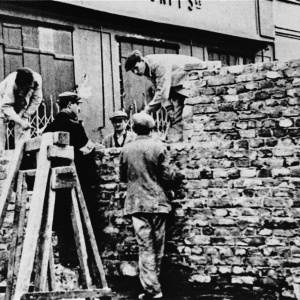
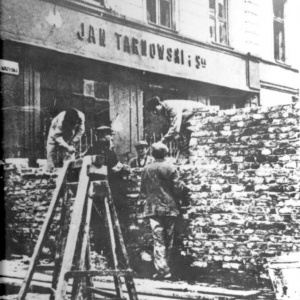
Another challenge has been tracking down the archives which possess the original imagery.  One thing that has just come to my attention, which I didn’t notice at the time, was the crop of the construction of the Warsaw ghetto wall.  I ordered the image and our designer subsequently pointed out that the crop is different from her low-res and won’t work in the design.

Ghetto1

We then wrote another archive, only to discover that we could not use their copy because it was very poor quality.  As you can see below, the crop is better but many of the details are lacking, particularly the  faces of the labourers.

Ghetto 2

We have since sourced a third image which we will be receiving next week. Their crop is different again, but it works in our layout.  Quality wise, we’ll have to wait and see. If it proves to be unsuitable, our search will continue.

Ghetto3

Author: Shannon Biederman, Curator.

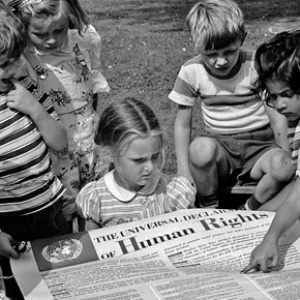
The Voices of Human Rights Leaders

The Voices of Human Rights Leaders

option2

In an exciting development, some of Australia’s foremost leaders in human rights have signed up to work with Sydney Jewish Museum on our new exhibition.

As my colleague Marie Bonardelli described in a previous blog post, the Museum is working on an app to enhance visitors’ experiences of the permanent exhibition. The app, called Voices, will use innovative technology to deliver audio content to visitors at various points throughout the Museum. It is our hope that the app will encourage different and deeper understandings of the exhibits on display.

A small group of high-profile Australians have recently agreed to lend us their voices by contributing to the app. This diverse group of leaders works across domestic and international spheres to improve the lives of women, men and children everywhere, by ensuring the fullest possible realisation of their fundamental rights. Each one of these champions has made a significant contribution to human rights in their particular area of interest or expertise.

With their contribution, Voices will now weave seminal words about human rights throughout the exhibition, adding a fresh and thought-provoking perspective to our displays. The inclusion of human rights voices will enrich the exhibition with a new dimension that is simultaneously contemporary and timeless, both Australian and universal, and bridges a gap between past and future.

Author: Sarah Haid, Researcher

Learning to let go

Learning to let go

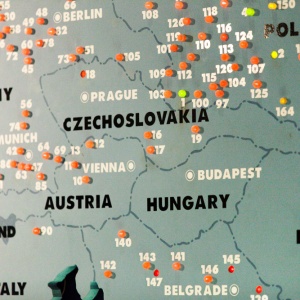
In the countdown to the exhibition opening there are lots of little deadlines. Today I feel like a huge weight has been lifted as we are getting close to signing off final proof of the maps. The maps have given us all sleepless nights. International borders shift continuously. Names of places change. As Anna Berger, one of our Curatorial Committee members would say, it is possible to have been born in Austria-Hungary, married in Czechoslovakia, have given birth in Hungary and resided in the Ukraine, and never have left the city of Munkacs. Or should that be spelled Munkacheve?

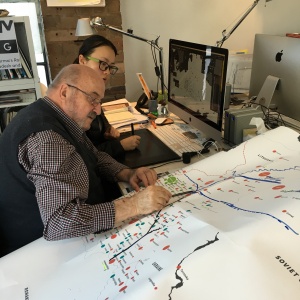
I went with our resident historian, Professor Konrad Kwiet, to the designers studio this afternoon to make some amendments to the maps and I don’t know if I’m more impressed with the graphic designers skills in creating these maps from scratch or our historians extraordinary knowledge of geography.

Around 1,200 ghettos were established during World War II to isolate, concentrate and control the Jews. One of the maps illustrates 230 of the ghettos, most of them established in occupied Poland. In this photo, I’ve captured the moment of Konrad hand-drawing the borders between the Ukraine and Belarus and noting that Starokostiantyniv should actually be located a little further to the left, and Zhmerinka a little to the right. Then we move on to the Einsatzgruppen map and I watch as Konrad corrects the routes of the SS-Einsatzgruppen and Police Battalions.

IMG_5328

PHOTO PROF KONRAD KWIET WITH THE DESIGNER HAIMENG ZHAO FROM X SQUARED DESIGN

As the designers refine the showcase designs I’m discovering that I have to let go of emotional attachments to certain objects that simply don’t fit in.

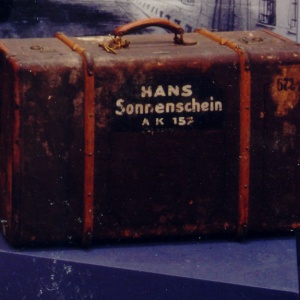
One of the items is a suitcase carried by Hans Sonnenschein when he was deported from Prague to Theresienstadt.

M1998.034

Deportees were allowed to bring one suitcase of possessions weighing no more than 50kg. Suitcases were marked with their names and transport numbers. In October 1944 Hans was deported to Auschwitz and murdered. Prior to his deportation he had handed over his suitcase to his brother who survived Theresienstadt. After the war the brother went back to Prague. He gave the suitcase to his nephew to use when he immigrated to Australia in 1947. That is how it found its way to our collection.

A suitcase is probably the most iconic object or context marker of immigration. It is an archetypal symbol of displacement and movement. The container and its contents, however meagre, are precious possessions carried to a new life. Sadly the original owner, whose name is clearly written in white paint together with his transport number, never had the opportunity to carry it to a new life.

Author: Roslyn Sugarman, Curator.

Surveying the scene

Surveying the scene

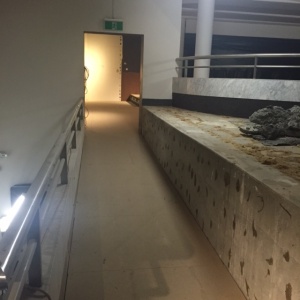
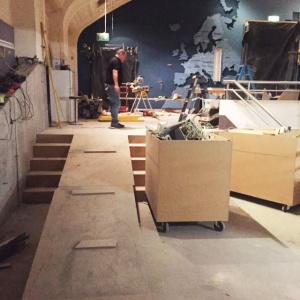
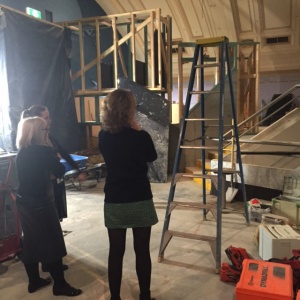
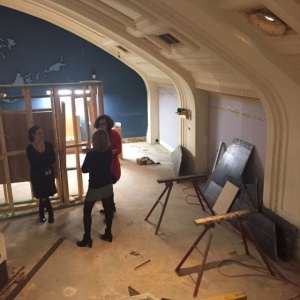
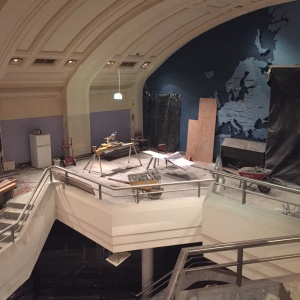
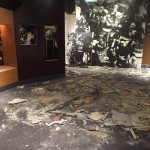
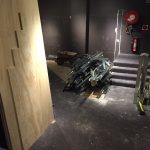
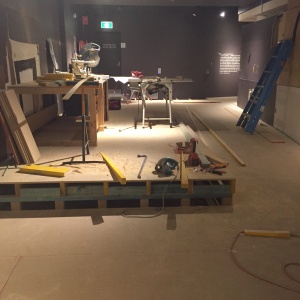
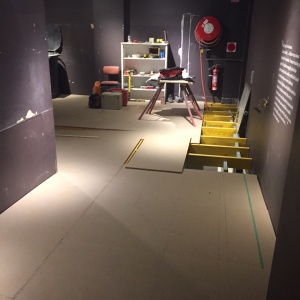
Yesterday, Museum curators and staff toured the construction site to see how work has been progressing. While previous visits tended to be characterised by rubble and debris, this time around the outline of the new exhibition was readily distinguishable.

Ramp leading to the former 'ghetto' section.

Ramp leading to the former ghetto section.

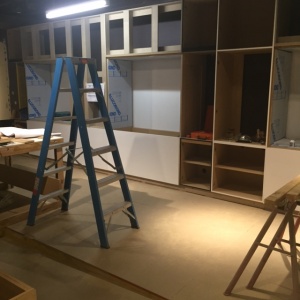
New cabinets in the section that was 'the ghetto' and 'Amidah'.

New cabinets in the section that was the ghetto and Amidah.

Newly constructed cabinets

Newly constructed cabinets

View up to the previous 'camp section'.

View up to the camp section.

Curators survey the new 'amphitheater' which will show coloured footage of liberation.

Curators survey the new amphitheater, which will show coloured footage of liberation.

Looking down on the new amphitheater and a spontaneous upgrade meeting.

Looking down on the new amphitheater and a spontaneous curatorial meeting.

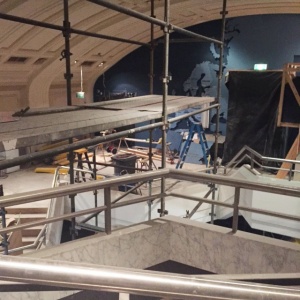
Scaffolding in and around 'the void'.

Scaffolding in and around the void.

‘Safely in, safely out’ philosophies of Holocaust Education

‘Safely in, safely out’ philosophies of Holocaust Education

MarieFB

How do we bring students and visitors safely in and out of this history? Listen to Education Officer Marie Bonardelli explain the Museum’s education philosophy.

Text:  Hi I’m Marie Bonardelli, one of the Education Officers at the Sydney Jewish Museum. My role in the redevelopment  is not only to assist with the selection of content and be mindful of how the educators and guides use the display, but also about how do we embed our educational philosophy in the exhibition so that we teach about this devastating and traumatic event in history, without traumatising our visitors.  We understand that visitors need to be brought safely into this history, and safely out of it.

Best practice Holocaust education reflects that rather than focus on 6 million Jewish victims, a number which often becomes little more than a statistic, the more meaningful way to understand genocide is to know what existed before and therefore, what was lost or nearly lost as a result of six million deaths – belief systems, ways of life, languages, culture, ideas, religion.

Unfortunately, when we deal with this history, we cannot avoid confronting material or atrocity imagery and testimony.  How we reveal this to visitors has been carefully thought out – particularly because we have young school students who also visit the display.

Subject matter like the open-air shootings from the invasion of the Soviet Union – an intrinsically linked aspects of the Holocaust, were separated in order to not lose the opportunity to speak about the Eastern invasion with younger students but without displaying the disturbing pit shooting photographs.

Beyond selection of content and being mindful of how we display graphic content, we want visitors to come and reflect on human action and inaction; to think about what moral dimensions and choices people were confronted with at the time.

Currently we have been training our guides about how to speak about some of the most confronting aspects of this history, specifically open-air shootings.  In one of the displays, we juxtapose a series of  killing orders with a schnapps flask, and photographs of shootings.  This choice and connection was to draw visitors attention to the mass participation of men in shootings, who at the war’s end said they were following orders to kill men, women, and children.  However, when you read the orders, they specifically say to not talk about the events, photograph the atrocities, or consume alcohol before, during or after.  In a display where we have photographs taken by soldiers, and a schnapps flask that was unearthed from a mass grave after the war, we are able to visually challenge visitors to realise that the defence of ‘following orders’ is untrue, and in fact, reveals that there still was choice even under the circumstances of genocide.

We have been very careful to not educate or create a display that lends itself to shock and awe tactics.  We understand that bad holocaust education is when we unreasonably expose visitors to confronting materials.  We think we have dealt sensitively but truthfully with the history.

Author: Marie Bonardelli, Education Officer


‘Selling’ the Holocaust

‘Selling’ the Holocaust

When I reveal to new acquaintances that I am the Marketing Manager at Sydney Jewish Museum, I am often met with one of three reactions:

  1. Confusion, followed by probing questions about the history of the Holocaust, the mental and physical well being of the Survivor volunteers and queries about my personal connection to the Museum and its mission. (As a non-Jewish Anglo-Saxon with a deep love of all things Taylor Swift, the connection is rarely self-evident).
  1. Excited recognition – often followed by interesting anecdotes about family members or friends who had been touched by this history, or recollections of deeply affecting visits to Auschwitz or the Anne Frank House in Holland.
  1. A thoughtful pause followed by an awkward cough and a muttered “So you ‘sell’ the Holocaust?”

Understandably, the last reaction tends to make me cringe. It is true, after all, that with the new Holocaust exhibition expected to open in November, I have, and will be devoting significant time and resources to ensuring that the exhibition is heavily promoted in an attempt to spike curiosity and inspire people to visit.

It is also true that the Holocaust has become the focus of a type of tourism that sees visitors flock in their thousands to sites such as Auschwitz, the Anne Frank House, Yad Vashem and the United States Holocaust Memorial Museum.

And yet, the notion of ‘selling the Holocaust’ is divisive, disturbing and problematic for academics, Jewish and non-Jewish communities alike. I myself react strongly to the idea that I am taking a narrative, a tragedy and a deep cultural wound and capitalising on it.

The concept of ‘disaster marketing’ is not specific to the Holocaust alone. I watched with interest some years ago as the foundation responsible for the National September 11 Memorial Museum in New York tried to navigate this murky space.

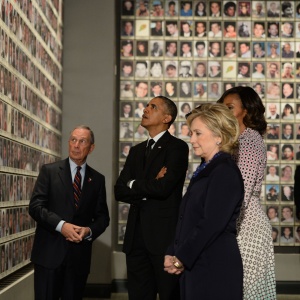
US President Barack Obama, former New York Mayor Michael Bloomberg, US First Lady Michelle Obama, former Secretary of State Hillary Clinton and former US President Bill Clinton tour the National September 11 Memorial.

US President Barack Obama, former New York Mayor Michael Bloomberg, US First Lady Michelle Obama, former Secretary of State Hillary Clinton and former US President Bill Clinton tour the National September 11 Memorial.

In the months and years that it took to establish the 9/11 Museum, the foundation was simultaneously accused of ‘using the memory of the deceased to create a cash cow’, ‘ritualising grief on a loop’ and ‘subsuming educational material in an emotionally manipulative narrative, punctuated by fraught objects and amplified by every architectural, cinematic, literary and religious tool available.’

The critique could have been lifted from the ‘comments section’ of every Holocaust Museum around the world.

And yet, while the presentation and representation may be scrutinised, few would doubt the need for these communal spaces of commemoration, remembrance and mourning or argue against the significance of a Museum that documents tragedy, encourages conversation and stands in opposition to dangerous and willful denial.

During my time at the SJM, I have developed three personal guiding principles, which govern how I represent the Museum and its work to the public:

  • In so much as possible, be a conduit for the Survivors, letting them speak, reflect and remember. As Eli Wiesel warned ‘whoever has not lived through the event can never really know it.’
  • It is not my place to force or impose ‘Holocaust lessons’ on others. The conclusions people draw are varied, personal and change over time. To quote the scholar Michael R Marrus, ‘there is a danger that lesson seeking often misshapes what we know about the event itself to fit particular causes and objectives.’ I can, however focus on how studying the history of the Holocaust  can enrich and deepen our understanding of human capacity and facilitate greater understanding about society, institutions and the world around us.
  • Finally, ensure always that the tone, tenor and contents of the Museums advertising and communications is accurate, sensitive and delivered with empathy and understanding.

With these thoughts in mind, I begin the process of ‘Marketing’ our new exhibition.

Author: Natalia Thomas, Marketing Manager

It takes a village…

It takes a village…

Adding names to the acknowledgements list for the new exhibition the other day, I was struck by the extraordinary number of people who have contributed to our work.

Academics, professionals, Survivors, high-profile figures and community members have all made their mark, enriching the exhibition with their insights and expertise. Currently I am liaising with archives and museums all over the world in my search for obscure photographic evidence and testimony. I open my inbox every morning to find correspondence in a Babel of languages, usually accompanied by the item I was looking for or a referral to someone else who might help. The generosity of the people and places we approach for assistance is a heartening glimmer in the middle of often dark work.

It is not just professionals who contribute. There is also a host of friends and family who support us by popping out to the library, listening to us think aloud, checking translations, making endless cups of tea and encouraging us on difficult days. The new exhibition is the culmination of a multitude of efforts by people of all walks of life.

As for me, when I tell people about my work at the Museum, I am often asked what drew my interest to the Holocaust. I respond that my background in human rights law and policy led me to the place where the global human rights movement started.

Dr Herbert “Doc” Evatt, the only Australian to ever act as Secretary General of the United Nations, presided over the passing of the Universal Declaration of Human Rights in 1948.

Dr Herbert “Doc” Evatt, the only Australian to ever act as Secretary General of the United Nations, presided over the passing of the Universal Declaration of Human Rights in 1948.

The Charter of the United Nations and the Universal Declaration of Human Rights were crafted against the backdrop of the Second World War and the Holocaust. On the first anniversary of the Universal Declaration, a United Nations public announcement stated:

It was quite clear that Nazi and fascist violation of every basic right had been one of the causes of the War, and that adequate safeguards would have to be provided to ensure that such violations would not happen again.

Understanding the background and genesis of human rights is a crucial step to ensuring their effective implementation and protection today.

At the outset of this project, I wondered whether it was appropriate for me, as a non-Jewish person, to be involved in telling the story of the Holocaust. But I now believe that the Holocaust, in addition to its intimate relevance for the Jewish people, also holds a universal relevance. We all have a stake in protecting the inherent worth and dignity of people and peoples around the world. And when human rights are violated, especially in such a horrific way as they were in the Holocaust, the whole world is injured, and tainted.

I am proud to be working on this exhibition, which I believe has a real role to play in safeguarding human rights in our society today – by acting as a reminder of what can happen when humanity is forgotten or abandoned, and there is nothing to stand in its place.

Author: Sarah Haid, Researcher


Filming History

Filming History

An aspect of the new exhibition that I am particularly excited about is the use of historical footage.

In the previous exhibition, snippets of footage were interspersed with Survivor testimony, offering historical context and serving to emphasise particular elements of the individual’s narrative.

The new exhibition will elevate film to feature, imbuing the space with movement and acknowledging the importance of historic footage as a tool for understanding.

Like all historical sources, film must be investigated and evaluated carefully. How far do they present an accurate record of an event and how far do they reflect the views of the film-maker?

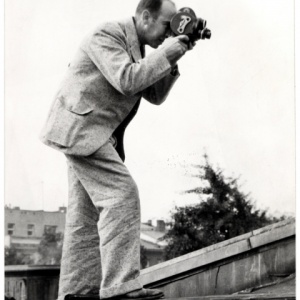
Julien Bryan films the German invasion of Warsaw in 1939. Image:USHMM

Julien Bryan films the German invasion of Warsaw in 1939. Image: USHMM

In the case of Holocaust era footage, much was recorded by the Nazis for propaganda purposes. However, it still offers a glimpse into the brutality of life under Nazi rule. What is also remarkable is the amount of colour footage we discovered.  The transition from familiar black and white to the look and feel that we would associate with cinema screens today has often been quite jarring.

In order to develop the four short films– from the Jewish world that was to Liberation, the upgrade team have poured over hundreds of hours of footage and combed through archives around the world.

During a trip to the US, I visited the United States Holocaust Memorial Museum to access exclusive materials. What we uncovered there was truly astounding and I have to extend my sincerest gratitude to the USHMM and in particular Bruce Levy, Project Coordinator of the Steven Spielberg Film and Video Archive.  This project would not have been possible without their assistance and I commend them on work they do.

We have all read a lot about the Holocaust and seen thousands of images but seeing the events through moving images is a powerful experience.  In a way, that is the greatest challenge and privilege of working with these materials – every time you think you’ve reached the roof, a window or door opens and leads to a whole other story.

Author: Shannon Biederman, Curator

Giving voice to the voiceless

Giving voice to the voiceless

It’s been four years since I joined the Education team at the Sydney Jewish Museum, and I continue to feel an enormous sense of privilege and responsibility working with Holocaust Survivors and being considered part of the mispocha (‘family’ in Yiddish).

The first time I heard a Survivor share their testimony was as a year 11 student in Vancouver, Canada. I remember being struck by the strength and resilience that it must have taken for the Survivor to share their most intimate and traumatic memories with a room full of strangers. I also knew that I could not ‘un – know’ what that Survivor had asked of me and everyone else who heard his testimony: we must listen to the voices from the past and think deeply about the incredible cruelty and kindness that human beings are capable of. I knew from that moment on that I was a changed person.

The cornerstone of my work as a Museum educator is to lend a voice to the voiceless – to introduce those who visit us to this unprecedented period of history and to act as a bridge between them and those who suffered, Survived and continue to grapple with the consequences of genocide.

Ever since the Museum was founded in 1992, Survivors have overseen the Museum’s policy making. It was they who were responsible the first objects collected (under the auspices of the Australian Association of Holocaust Survivors and Descendants); and the Survivors who continue to move visitors to this day, adding the nuance of individual experience to the overwhelming number of six million.

As age and time have begun to reduced the numbers of our Survivor volunteers, the museum has taken pains to ensure that their voices continue to be the heart and soul of this space. Using the latest technology, the Museum begun work on a new audio app that will enhance visitors experience of the permanent exhibition. Unsurprisingly, the App is named Voices.

The Voices work began with Antares Wells, one of the Museum’s superb researchers who listened to hundreds of testimonies (many hours each) to help create an experience for visitors that would bring them closer to this event.

For the last two years, I have built on this foundation, searching for Survivor, witness, perpetrator, and expert testimony to deepen the Holocaust narrative on display. Subsequently we have also added Museum educators and curators speaking about various artefacts, as well as testimonies that relate to music from the time.

It has been a harrowing and gruelling endeavour. I had to listen (and re-listen), select, and edit these testimonies before allocating them throughout the exhibition.  At certain points it felt impossible to choose when multiple voices represented such different and competing interpretations and experiences.

Another notable challenge was the silence and absence of voices in certain sections.  At these moments the silence echoed and I felt like I was getting closer to truly understanding the implications of the murder of six million Jewish people and the weight of a missing generation.

Adek2

Post-liberation Hela, Adek & their daughter Mary Stein

One example of a voice that has remained with me since I first heard it is the testimony of Adek Stein, one of 67 people (approximately) who successfully escaped Treblinka death camp.  In this fragment of his testimony, Adek’s words reveal an intimate and poignant view of one night in Treblinka:

They arrived again.  A new transport of a thousand people that means we got in one day and a night two thousand people.  And they have been undressed…  Two thousand people standing under the sky; men, women, children, rabbis, doctors, professors, thieves, murderers, a nation.  You’ve got all kinds… Two thousand people. We, the hundred people who used to work from one day to another day, were…a little far away, standing, looking around.  Two thousand people looking for help.  Crying, they just start to call…some words you use when you are sometimes in danger, or sick … “Shema Yisrael, Adonai Eloheinu Adonai Echad”.  Thousand people standing under the sky in the night and calling Shema Yisrael, for help, to God…  All night.  No help came.

Adek’s testimony not only bears witness to the murder of thousands of people in Treblinka, but also speaks to how these victims, all from different backgrounds, united and resisted.

Shema Yisrael is one of the central Jewish prayers that is recited before bed every evening, and upon rising in the morning. It is meant to all be said in times of danger and one’s last words before death. It is a prayer that is an affirmation of Judaism and a declaration of faith in God.  This personal dimension of the Jewish experience can only be revealed through the voice of a Survivor.

Author: Marie Bonardelli, Education Officer

Art and the new exhibition

Art and the new exhibition

The new Holocaust exhibition is a wonderful opportunity for us to show more of our collection. More than 300 artefacts will be displayed thus doubling the number of objects on our previous exhibition.

I have a soft spot for drawings and paintings as in my former career I used to be the curator of a major art gallery in Johannesburg. I’ve always wanted to exhibit some of the original artworks that we have in the Sydney Jewish Museum collection. We have only a handful of artworks produced during the Holocaust. These artists did not have ready access to materials, and faced punishment if they were caught documenting the horrors that were taking place daily. Artwork made during the Holocaust, when experiences of events are raw and fresh in the mind of those experiencing it, are particularly powerful.

One of the artworks which will go on display belonged to Ernest Morgenstern, who was not an artist; in fact, he was a lawyer by profession when he was deported from his hometown in Czechoslovakia to Theresienstadt, the concentration camp in Czechoslovakia, in January 1942. He had the artistic skills to depict the events as he witnessed them. His non-Jewish fiancée, Trudy, smuggled art materials in to him with various transports and thus began his compulsion to draw and to document.

Just before he was deported to Auschwitz in December 1943, Ernest’s drawings were hidden. (They were only recovered after liberation). After the war, in July 1945, Ernest and Trudy married. As soon as they found an apartment he began to draw again. This time he was compelled to recreate the agony of daily existence in Auschwitz. His ability to not only recall scenes like the beating of an inmate in the barracks, but also convey the  emotional experience, reveals how artwork bears witness, and in many ways visually represents the unspeakable.

Author: Roslyn Sugarman, Curator


What’s Australia Got to Do with It?

What’s Australia Got to Do with It?

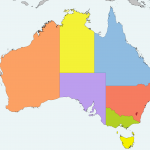
Australia_location_map_recoloredEver wondered whether Australia has to do with the Holocaust?
You are not alone. Most Australians commonly associate their country’s involvement with WWII with the war in the Pacific and for good reason. Yet there are more Australian connections to the Holocaust than you might first imagine.

For example, Australia was actually considered by one top Nazi official as a place where European Jewry might be exiled—a suggestion so far fetched that even Heinrich Himmler did not consider it seriously. On a deeper level, another Australian connection is the erroneous and harmful notions of ‘race science’ that infused the Nazi world view. Such views were also prevalent in Australia in the early part of last century—with their deleterious effects being felt most keenly by Australia’s indigenous populations.

Sadly, Australia also refused to change its migration quotas to allow in Jewish refugees trying to flee Germany and Austria in the late 1930s. In the post war period, discriminatory policies against Jewish migration continued, even after knowledge of the mass murders of Europe’s Jews. Despite these exclusionary policies Australia did eventually receive the most Holocaust survivors per capita with the exception of Israel. These individuals changed the face of the Jewish and broader Australian communities and we are proud to profile their stories in the new exhibition.

Author – Avril Alba, Project Director

When the jackhammers fall silent

When the jackhammers fall silent

IMG_1279

Previously the Ghetto section

IMG_1277

Formerly Amidah

IMG_1293

Formerly the Concentration Camp section

Some time has passed since the jackhammers moved in, and the Museum team has started to see its vision become a reality.

While the builders bustle away, the upgrade team have been busy proofing text and captions, sourcing final imagery and reviewing the video footage that will be projected throughout the space.

While the previous Holocaust exhibition came alive through the presence of Holocaust Survivors and guides – instillation and interactive components will ensure that the next iteration has a dynamism all its own.

Watch this space.

Author – Natalia Thomas, Marketing Manager


The Complexity of the Camp System

The Complexity of the Camp System

IMG_1512

Previous Museum Camp Map – Sydney Jewish Museum

What do you do when approached to provide the research for a state-of-the-art interactive on the camp system for Sydney’s new Holocaust exhibition? If you’re anything like me, you feel honoured and humbled. Perhaps you also feel a little apprehensive about the task – but, naively, not overly so. After all, how many camps could there have been? Just how complex could this terrible system assembled by the Nazis be?

The answer to this last question, as it turns out, is infinitely. Between the many different kinds of camps, spread across Europe and North Africa; between the subcamps and satellite camps; from the sprawling complexes to the tiny work outposts; from Dachau, which lasted the 12 years of Nazi rule, to barns where inmates on the move spent only a few nights – the camp system now seems to me an endless organic terror. One could spend a lifetime studying it and not want for material.

One thing about the work that surprised me was the breadth of the camp system’s reach – just how many lives it has touched. On a recent trip to Perth to visit my boyfriend’s family, I spent an afternoon talking with his Nonno, who spent a year in Nazi POW camps during the Second World War. Emilio drew me a map of the camps he was incarcerated in and the factories where he worked, recounting as many details as he could remember. Upon returning to Sydney, I was able to track down the camps Emilio named or drew, and feed my research back to the family, who were moved to receive it.

I think you would be hard pressed to find someone whose life has not been affected to some degree by this terrible chapter of human history.

Author – Sarah Haid, Researcher

A picture worth a thousand words

A picture worth a thousand words

For the past few years, the exhibition team has been pouring over thousands of images, debating which one is best suited for each section.

The Museum’s original Holocaust exhibition contained 181 images.  The new display will have 270 image plus hundreds of more in interactives and films.  Despite this greatly expanded scope, tough decisions had to be made and there were many heated debates.

Some images were essential and all were in agreement, like the powerful images from the Auschwitz Album from Yad Vashem.

Picture 2

Highlighting the Sydney Jewish Museum collection was a priority Such as this image donated by Holocaust Survivor Olga Horak showing the antisemitism in her native Slovakia.

Olga

Despite the abundance of material, there were areas the team struggled to find photographs.  One difficult area was resistance in the ghetto.  The images from the Warsaw ghetto were taken from the perspective of the perpetrators and thus do not capture the heroic resistance on the Jews.

Picture 3

Each team member had an image that particularly resonated with them and for it to be included a compelling case would have to be made as to why it was the best choice.  We have all won and lost some of these debates but the process has led to the best possible outcome.  Visitor can rest assured that every image has been very carefully considered.

Author – Shannon Biederman, Curator

Educating in the new exhibition

Educating in the new exhibition

EducationRoom_lowres-69   EducationRoom_lowres-73       OlgaBlanket_lowres-11

After a busy 2015, which saw the Museum host a record 25,000 school students, we certainly have not lost any momentum. Despite the construction work, we have continued to educate visitors about Jewish culture and history through powerful Survivor testimony, expert seminars and insightful tours of the remaining three exhibitions.

While we continue to offer our world class education programs, the Education team has also been busy preparing our volunteer guides for the opening of the new permanent Holocaust exhibition.

Volunteers are currently participating in a six month course, which not only promotes object based learning, but also provides opportunities for nuanced discussions about the history of the Holocaust and its contemporary connections.

In addition, new artefact and photographs will allow our guides to deepen the Holocaust narrative by incorporating the experiences of victims, Survivors, witnesses and perpetrators into their tours. In this way we hope to help visitors grapple with the complexities of the Holocaust and consider how the sweeping tragedy was the result of human action (and inaction).

With bigger sections dedicated to pre-war Jewish life and the post-liberation experiences of Survivors and refugees, we hope visitors will not only consider how the atrocities of the Holocaust were committed, but understand more about what was lost as a result of the murder of approximately six million Jewish people – culture, language, ideas, beliefs and ways of life.  Furthermore, these sections will also speak to the resilience and continuity of Jewish life through the Survivors who migrated to Sydney.

As a representative of the Education team, I have been involved in all aspects of planning, offering input into the photographs, testimonies, artefacts and multimedia in the new exhibition. I was conscious throughout to ensure that visitors of all ages could interact with the history of the Holocaust in a way that was age appropriate while also considering the ever-present reverberations of genocide.

This is an exciting chapter in the Museum’s history and it has been a great privilege to work on this project. I can’t wait to work in this brand new space!

Author – Marie Bonardelli, Education Officer

Inside the archives

Inside the archives

Museum Archives

When the Museum opened in 1992, it had only been collecting memorabilia from Survivors for a year or so. Thus it is not surprising to hear that there were only a few hundred objects in the collection at that time. However, it didn’t necessarily matter that there were few objects on display because the Museum was designed as a backdrop for the survivors to tell their story. These historical eyewitnesses were in a sense ‘living’ exhibits. Over the years, curators added artefacts to the displays where possible. By the time we dismantled the old Holocaust exhibition last month, we counted 156 objects on display.

What have we done with them? They are all safely packed away in storage in acid-free archival packaging material. Some items will reappear on the new Holocaust displays; others will remain resting safely in the Archives until there is another opportunity to display them. Now with a collection numbering over 8,000 items, only a small percentage will make it onto the new display.

Watch this space to find out how many artefacts will star in the new Holocaust exhibition.

Author  – Roslyn Sugarman, Chief Curator

A Generational Shift is Underway

A Generational Shift is Underway

Copyright Giselle Haber Photography

Curators Shannon Biederman, Roslyn Sugarman and Project Director Avril Alba

Work has begun on the new permanent Holocaust exhibition at the Sydney Jewish Museum. Marking the first major redevelopment of the Holocaust display since its opening in 1992, the new exhibition is meaningful not only in terms of what it contains but also in what it signifies.

While we are still lucky enough to have Survivors both witness and participate in this change, we do know that this will not be the case forever. This new exhibition, therefore, embodies not only the fruits of five years of historical research but also personifies an historical moment—the transfer of the custodianship of Holocaust commemoration by Survivors to the next generation.

In each and every aspect of the new display the voices of the Survivors will ‘speak’ through and to a new generation. The objects they and the SJM curators have lovingly preserved will tell their stories, their testimony will enhance each display through an App that comprises a world first in both content and approach and their wish that their memories be primarily a tool for education in a world still in dire need of its message will be transmitted by dedicated educators and guides from the second and third generations.

In the Jewish tradition when speaking of those passed, one immediately adds the words, ‘May their memory be for a blessing’. As we begin to build the new permanent exhibition, the blessing of the Survivors’ memories accompanies and guides us every step of the way.

Author Avril Alba – Project Director/Consulting Curator


Construction Commences

Construction Commences

IMG_1037 IMG_1055 IMG_1044

On Monday 11th April, builders began the process of dismantling the existing Holocaust exhibition.

This was a sad and confronting experience for the Survivors who founded the space, and also for the staff and volunteers (old and new) who have invested countless hours into memorising the exhibition narrative and sharing the history and stories imbued there.

Amid the sorrow, is a palpable sense of excitement for what the future holds. With change comes the opportunity to challenge and renew our understanding of this unprecedented event and reflect on the kind of future we’d like to create.

When asked if he had had a chance to ‘say goodbye’, Holocaust Survivor Eddie Jaku shook his head emphatically. He said he would ‘never say goodbye’ to the Museum. He would continue to share his testimony with visitors and his hope for a better future for as long as he is able.

In short, the spirit of the Museum is not changing, it’s just having a bit of a face lift.

Author Natalia Thomas, Marketing Manager.

Emptying the showcases

Emptying the showcases

IMG_4593 IMG_4602 IMG_4604

Working with artefacts can be distressing for our curators, especially when handling material related to the perpetrators of a mass murder.

As the curators take down the Serniki exhibition to prepare for the new Holocaust exhibits, they need to do a stock check: counting the bullets and soil encrusted cartridge cases.

These were found during the archaeological excavation of a mass murder site in Serniki, Ukraine, in 1990. They were later tendered as material evidence in the war crimes trial in Australia in 1992.

The Jews of Serniki were murdered in one day in early September 1942. The German execution squad arrived shortly before lunch and left in the late afternoon. With the help of local collaborators, the Jews were rounded up and brought to a pit 40 metres long and 5 metres wide on the outskirts of the village. The victims were shot and clubbed to death.

Author – Roslyn Sugarman, Curator.

In the beginning…

In the beginning…

IMG_1351 IMG_1378 IMG_1506

Much has changed since the Museum’s Holocaust exhibition was conceived, constructed and opened on the 18th November, 1992.

The Holocaust Survivor founders have aged, many have passed away, and societies’ understanding of the period has been deepened by the work of dedicated academics and scholars. Tragically, national, ethnic, racial and religious groups have continued to be the victims of targeted violence, underscoring the urgent need for further and more effective education.

At a time of intergenerational change, it was necessary that the Museum find a way to find a way to ensure that the Survivor voices remained at the forefront of this space, retaining the deeply personal narrative at the heart of the Museum experience.

In 2012, the Museum launched its Capital Appeal, appealing to the generosity of business leaders and wider Jewish Community. The resulting generosity of these parties allowed the Museum to embark on an ambitious project, resulting in the development of a major new Holocaust exhibition.

The exhibition will form a bridge between past and present, preserving Survivor voices and enhancing our immediate and physical connection to the past through the display of over one hundred new objects and images.

A custom curated App titled ‘Voices’ will deepen the Holocaust narrative, bringing the voices of Holocaust Survivors, witnesses, perpetrators and experts into the Museum space. Installations and interactives containing hundreds of images and footage will also reveal both the extent of Nazi persecution and the heroism of those who defied the regime.

The exhibition will be the result of extensive assessments by the curatorial teams of the artefacts and testimonies housed in the Sydney Jewish Museum collection. As part of the process, consultation was also undertaken with the education team, who offered input as to which portions of the development proposal would support the SJM’s educational goals.

During the next few months, you will be hearing the ‘voices’ of those involved in this project, offering  a behind the scenes glimpse at the research,  hours and ‘angst’ that contribute to the development of a major new exhibition.

We invite you to embark on this journey with us and make this project yours as much as it is ours.

Authors Avril Alba, Project Director & Natalia Thomas, Marketing Manager.

Introducing the team

Introducing the team

IMG_1066 IMG_1063 IMG_1064

An immense amount of preparation and research has gone into this project, and as the saying goes, it has taken a village.

Below are some of the individuals you will be hearing from of the coming weeks, who have consulted on, researched, fund-raised for and been the driving forces behind this project.

Project Director/Consulting Curator: Dr Avril Alba, Lecturer in Holocaust Studies and Jewish Civilization at the University of Sydney, Australia. From 2001-2011 she was the Education Director at the Sydney Jewish Museum, where she also served as the Project Director/ Curator for the Sydney Jewish Museum’s permanent exhibition, ‘Culture and Continuity’. Dr Alba teaches, researches and consults in the areas of Holocaust representation, Jewish and Museum studies.

Resident Historian: Professor Konrad Kwiet. Professor Kwiet is the Emeritus Professor in German and European Studies at Macquarie University and former chief historian of the Australian war crimes commission (SIU), and resident historian at the Sydney Jewish Museum. He is the author of 10 books and over 80 articles, chapters and historical dictionary entries.

Creative Direction and Exhibition Design

Jisuk Han – X Squared Design

Haimeng Zhao – Graphic Designer

Curatorial Team:

Roslyn Sugarman, John Saunders Curatorial Chair, the Sydney Jewish Museum

Shannon Biederman, Curator Collection, the Sydney Jewish Museum

Education Project Consultant:

Marie Bonardelli, Education Officer, the Sydney Jewish Museum

Researchers:

Sarah Haid

Sean Sidky

Antares Wells

Fundraising:

Charles Aaronson, Special Projects, Sydney Jewish Museum

Robert Schneider, Development Director, Sydney Jewish Museum