
Golems, Grit and Good Stories
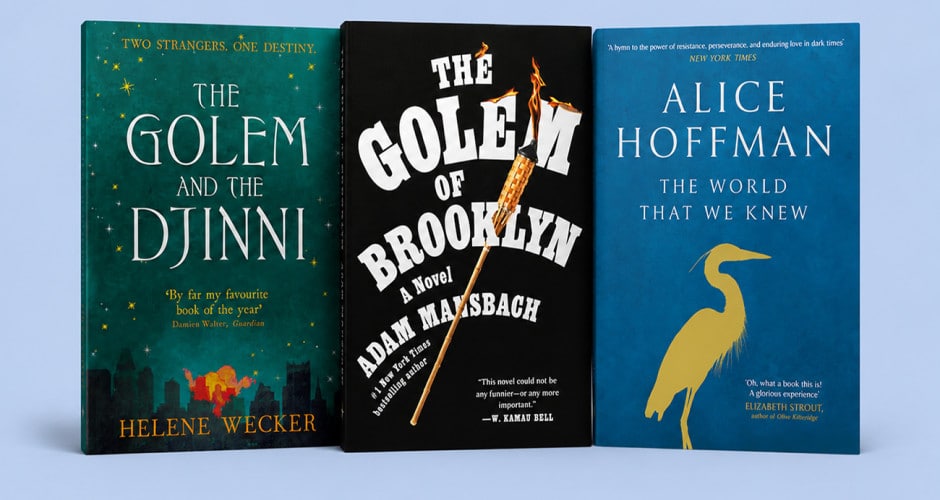
I want to talk about three works of fiction that draw on the legend of the Golem to examine Jewish identity and survival across vastly different eras and times. Together, these novels demonstrate the enduring power of folklore while illuminating deeply human struggles for the sake of love and belonging.
My most recent read, Alice Hoffman’s The World That We Knew, is the most sombre and lyrical of the three, rooted firmly in the horrors of the Holocaust. Here, the golem Ava is born from desperation and maternal love. She has been created solely to protect a Jewish child from annihilation. Hoffman blends historical realism with mysticism to emphasize the endurance of love in the face of genocide. Her tone is elegiac and reflective, using folklore as a quiet counterpoint to the background of historic atrocity.
By contrast, Adam Mansbach’s The Golem of Brooklyn brings the golem into the chaotic present with biting humour and satire. Set in contemporary America, the novel confronts modern antisemitism head-on, using absurdity to both disguise and reveal a deep moral urgency. Mansbach’s golem is not merely a protector but a living archive of Jewish trauma, forcing characters, and readers to consider the terms of vengeance and how one should respond to hatred today. While far more irreverent than Hoffman’s work, it shares the same insistence that history must be remembered and reckoned with.
Helene Wecker’s The Golem and the Djinni sits apart from these two novels in both tone and time. Set in 1899 New York, it explores the immigrant experience through two supernatural outsiders. Chava and Ahmad are less agents of protection and more mirrors of loneliness and displacement. Wecker focuses on identity and their connection, blending Jewish and Middle Eastern folklore to suggest a shared humanity. Her novel is quieter than Mansbach’s and less tragic than Hoffman’s.
Although I read these books separately, returning to Hoffman’s novel prompted me to see them as a collective whole. Together, they show how ancient myths can be reshaped to speak powerfully to different historical moments. Whether confronting genocide, modern extremism, or the quiet isolation by immigration, each story feels intimate, inviting reflection on survival, identity, and what it means to remain human in times of fear and change.
What’s On Newsletter
Keep up to date on all Museum events and exhibitions.